
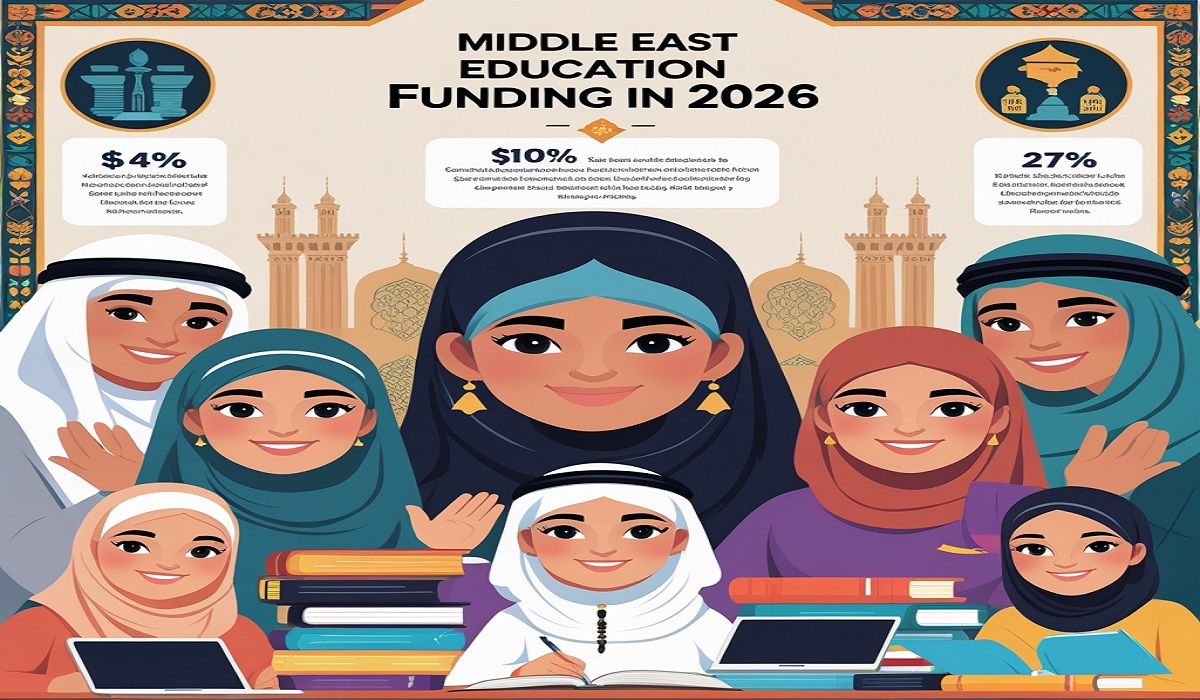
Middle East Education Funding
Middle East Education Funding: Think of a big game, like building the tallest tower. Every player needs good blocks to build with. In the real world, education is like that game. To build a strong future, students need good teachers, books, and schools. These things cost money. That money is called funding. Right now, the countries in the Middle East are planning how to spend their money on this important game.
They are looking ahead to the year 2026. The plans for Middle East Education Funding in 2026 are taking shape. These plans will decide what students learn and how they learn it. This article will explain the latest news and ideas about Middle East Education Fund. We will look at where the money is coming from, where it is going, and why it is so important for everyone.
The Current Landscape of Educational Investment
The way countries in the Middle East pay for education is changing. In the past, a large amount of money came from government budgets. Oil and gas revenues often filled these budgets. This money built many universities and schools. It provided free education for millions of students.
This was a very good start. However, the world’s economy is changing. New types of jobs are appearing. Leaders know they must prepare young people for these new jobs. This preparation requires a different kind of investment.
Today, the conversation about Middle East Education Funding is more complex. It is not only about building more classrooms. It is about improving the quality inside those classrooms. Governments are asking important questions. Are students learning the right skills for a digital world? How can technology make learning better?
Can private companies help in this mission? The answers to these questions are shaping the latest strategies. The goal for 2026 is to create education systems that are flexible, modern, and ready for future challenges. This shift marks a significant moment for Middle East Education Funding in 2026.
To understand this shift, we must look at the key areas of focus. First, there is a strong push toward science, technology, engineering, and mathematics (STEM). Second, vocational training is getting more attention. This training teaches specific skills for specific jobs, like coding or renewable energy engineering. Third, there is a big investment in digital tools. Online learning platforms and smart classrooms are becoming normal. All these areas need careful planning and, most importantly, consistent funding. The Middle East Education Fund plans for the next few years must support all these parts equally.
Primary Sources for Academic Financial Support
Where does the money for schools and universities come from? For Middle East Education Funding, there are three main sources. The first and most important source is still the government. National budgets set aside funds for the Ministry of Education. These funds pay teacher salaries, maintain buildings, and buy textbooks. In 2026, governments promise to keep education a top priority. They are planning to protect this part of the budget even when other costs rise. This is a promise to young people and their families.
The second source of Middle East Education Funding is the private sector. This includes companies, foundations, and wealthy individuals. Their role is growing quickly. Many businesses now offer scholarships for university students. They also fund research labs in partnership with colleges. Some companies even build their own training centers. They do this because they need skilled workers in the future. This partnership between business and education is a key trend for Middle East Education Funding in 2026. It brings new ideas and real-world experience into the classroom.
The third source is international organizations. Groups like the World Bank and the United Nations provide grants and loans. They support special projects, such as educating refugee children or promoting girls’ education. These funds are crucial for tackling difficult problems. They help ensure that no child is left behind. As we look toward 2026, this mix of government, private, and international money makes the Middle East Education Funding system stronger. It spreads the responsibility and shares the great task of educating the next generation.
- Government Budgets: The main source, funding core operations and public schools.
- Private Investments: Includes scholarships, company training programs, and research partnerships.
- International Grants: Funds targeted projects for vulnerable groups and system-wide improvements.
Innovations in Scholarship and Grant Models
The old way of giving scholarships was simple. A student with top grades would get money to pay for university. This is still important. But the latest models for Middle East Education Funding are more creative. One new idea is the “income-share agreement.” In this model, a student’s education is paid for by an investor. After graduation, the student pays back a small percentage of their salary for a set number of years. If the graduate does not get a good job, they pay very little or nothing back. This reduces risk for the student.
Another innovation is the micro-scholarship. Instead of one large sum for university, students can earn small grants for achievements in high school. Doing well in a science fair or learning a computer language might earn a student $500. These small amounts add up. They make college more affordable and motivate students early. This approach is part of the smart planning for Middle East Education Funding in 2026. It encourages continuous learning and rewards many students, not just the top few.
Grants for specific skills are also rising. A technology company might fund a “coding bootcamp” for 100 students. The program is short, intense, and free for the students. Those who finish are guaranteed a job interview. This directly links Middle East Education Funding to job results. It ensures the money trains people for work that actually exists. These new models make the system more efficient and fair. They are a vital part of the evolving strategy for Middle East Education Funding in 2026.
Government Policies Shaping Financial Aid
Government rules are the framework that holds everything together. Policies decide who gets help and how much they get. For Middle East Education Funding, several new policy trends are clear. One major trend is “conditional cash transfers.” In this system, the government gives money directly to poor families. To receive the money, the family must prove their children are attending school regularly. This policy tackles two problems at once: poverty and low school attendance. It is a powerful tool for Middle East Education Funding in 2026.
Another key policy is the focus on “education for employment.” Governments are creating lists of high-demand jobs. They then give extra funding to universities and colleges that offer programs in these fields. For example, a college with a strong program in artificial intelligence might get more money than one with a less-needed program. This policy guides Middle East Education Funding toward national economic goals. It helps make sure that students can find work after they finish their studies.
Tax incentives are a third important policy. A government might lower taxes for a company that donates to education. Or, it might offer tax breaks to families saving for their child’s college in a special bank account. These policies use the tax system to encourage more investment in learning. They bring more private money into the ecosystem of Middle East Education Funding. Together, these policies create a supportive environment. They ensure that the financial plans for Middle East Education Funding in 2026 are not just words on paper, but actions that change lives.
The Role of Technology in Managing Educational Funds
Technology is not just a subject taught in school. It is also a tool for managing the money that runs schools. Modern software helps track every dollar spent on Middle East Education Funding. This transparency is crucial. Leaders can see if money for teacher training is actually being used for that purpose. They can check if funds for new computers reached a rural school. This prevents waste and builds public trust. For the plans in 2026, using technology for clear accounting is a non-negotiable standard.
Blockchain is one technology being tested. Think of it as a digital ledger that cannot be changed. When a scholarship is awarded, the record can be put on a blockchain. The student, the university, and the donor can all see the same record. No one can alter it. This makes the process of Middle East Education Funding very secure and trustworthy. It reduces paperwork and stops fraud. While still new, blockchain could become common in Middle East Education Funding in 2026 for high-value grants and contracts.
Artificial intelligence (AI) also plays a role. AI programs can analyze data to find patterns. They can predict which students might drop out of university for financial reasons. The system can then alert a counselor to offer that student a emergency grant or a part-time job on campus. This is a proactive use of Middle East Education Funding. It helps students before they are in crisis. By using technology smartly, managers of Middle East Education Funding can make sure help arrives at the right time and place.
Challenges and Solutions in Funding Distribution
Getting money is one challenge. Making sure it reaches the right people is another. A major challenge for Middle East Education Funding is geographic inequality. Schools in big cities often have more resources than schools in remote villages or poor neighborhoods.
The latest strategies for 2026 aim to fix this. One solution is the “weighted funding formula.” In this system, schools with more disadvantaged students automatically receive more money per student. This gives them a fair chance to succeed.
Another challenge is bureaucracy. Sometimes, money gets stuck in government offices due to slow paperwork. The solution is to simplify the rules and use digital payments. For instance, funds for school supplies can be sent directly to a principal’s secure digital account.
This speeds up the process. Cutting red tape is a priority for improving Middle East Education Funding in 2026. It means resources get to classrooms faster.
A third challenge is measuring success. How do we know if the money is making education better? The old way was to count how many schools were built. The new way is to measure student learning outcomes.
Are reading and math scores improving? Are graduates getting jobs? Middle East Education Fund is increasingly tied to these results. Schools that show improvement may receive bonus funding. This creates a powerful incentive for quality, which is the ultimate goal of all this investment.
Forecasting the Future of Academic Sponsorship
What will Middle East Education Funding look like after 2026? The trends suggest a more personalized and lifelong system. Sponsorship may not only be for young people in college. An adult worker who needs to learn a new skill might also get financial aid. This idea of “lifelong learning subsidies” will likely grow. It recognizes that in a fast-changing world, learning never stops. Funding must support this continuous journey.
We will also see more “blended finance” models. This means a single project might be paid for by a government grant, a private loan, and a philanthropic donation all mixed together. This approach pools resources and shares risk. It allows for bigger, more ambitious projects, like building a whole new digital university. The future of Middle East Education Funding will be collaborative. No single source will bear the full cost alone.
Finally, the focus will stay firmly on value and impact. Donors and governments will want clear evidence that their money creates positive change. They will fund programs that can prove they teach skills employers want.
The conversation about Middle East Education Funding in 2026 is setting the stage for this future. It is moving from just spending money to investing wisely in human potential. This shift promises a brighter future for every learner in the region.
Frequently Asked Questions
What is the biggest change in Middle East Education Funding for 2026?
The biggest change is the strong focus on skills for the future, like technology and renewable energy. Money is being directed away from old programs and toward new training that leads directly to jobs. The plans for Middle East Education Funding in 2026 are very practical and connected to the economy.
How can a student find scholarships under the new systems?
Students should look beyond just university websites. They should check the websites of big companies, especially in technology and engineering. Also, many governments are creating single online portals where students can search and apply for all official scholarships and grants. This is a latest development in Middle East Education Funding.
Will government funding for free public education decrease?
No, core government funding for basic public education is expected to remain stable. The change is that additional money from private and international partners is increasing. This extra money helps add new programs and technology without taking away from the basic right to free education.
How does funding help improve the quality of teaching?
A part of Middle East Education Funding is specifically for teacher training. Teachers receive scholarships to get advanced degrees. They attend workshops on new teaching methods. Better-trained teachers create better learning experiences for students, which is a key goal of the Middle East Education Funding in 2026 plans.
Are there specific funds for girls’ education?
Yes, this remains a very important area. Many international grants and private foundations have special programs to support girls and young women in STEM fields. National policies also often include targets for increasing the number of female graduates in science and technology, backed by dedicated funding.
Conclusion
The plans for Middle East Education Funding in 2026 represent a thoughtful and modern approach. It is no longer just about quantity—building more schools—but deeply about quality and relevance. By drawing money from governments, businesses, and global partners, the region is building a resilient system.
By using technology to manage funds and new models to award scholarships, the system is becoming more efficient and fair. The ultimate aim is clear: to equip every young person with the knowledge and skills they need to thrive in the future.
The careful and innovative management of Middle East Education Funding is the foundation for this brighter tomorrow, ensuring that the investment made today yields a strong and capable generation for the years to come.