
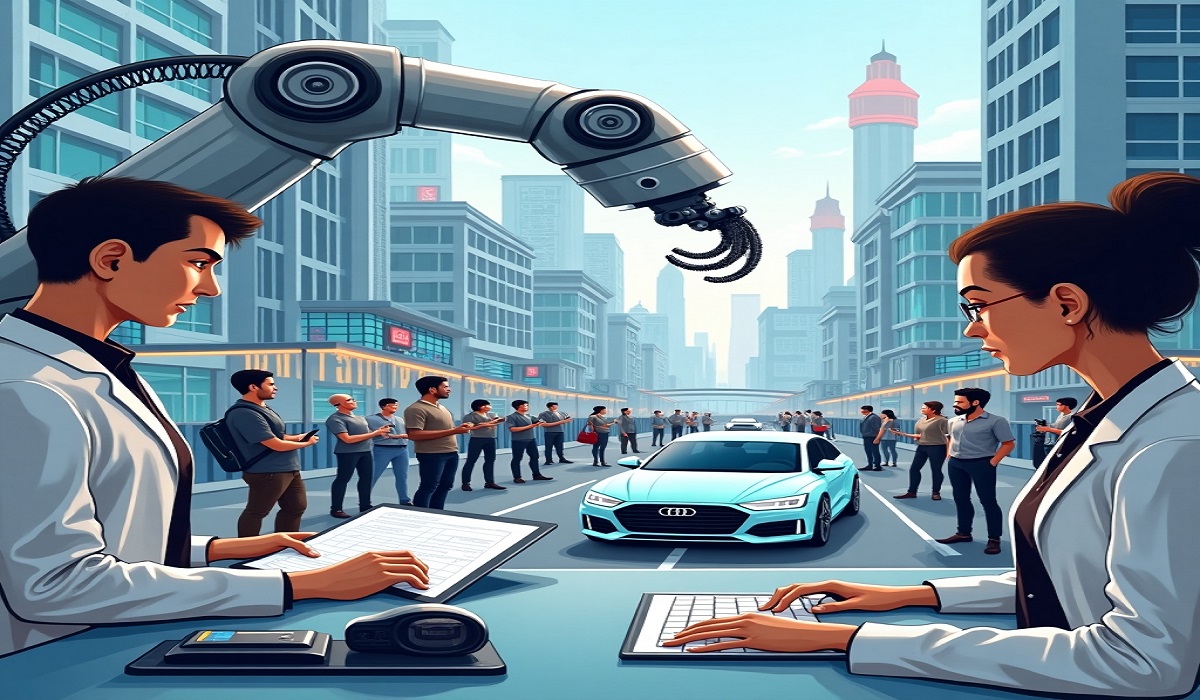
Automation & Future Jobs
Automation & Future Jobs: Automation is when machines or software do tasks for us. These tasks might be simple or complex. You see automation everywhere. A coffee maker brewing your morning cup is a simple form. A computer program sorting thousands of emails is another. This change is constant, and it directly influences future jobs. Many people wonder if robots will take all the work.
The complete story is more positive and interesting. Automation changes jobs more than it removes them entirely. It creates new types of work we have not seen before. Understanding this relationship between automation and future jobs helps us prepare. We can focus on learning skills that machines cannot easily copy. This article explains this shift with clear, latest examples. We will look at real situations happening now.
The link between automation and future jobs is not about replacement. It is about transformation. Think of a bank teller twenty years ago. Their main job was counting cash and handing it to customers. Now, an ATM handles that basic task. But the bank teller’s job did not vanish. It transformed. Today, a teller might help a customer with a complex loan application or give financial advice.
The routine, repetitive part of the job was automated. The human part, needing trust and problem-solving, became more important. This pattern repeats across many fields. By looking at current examples of automation and future jobs, we see a path forward. It is a path where people and machines work together.
This shift asks important questions. What makes human work special? Skills like understanding feelings, creative thinking, and dealing with unexpected problems are key. These are areas where humans excel. The goal of discussing automation and future jobs is to reduce fear. We replace uncertainty with useful knowledge.
With the right information, anyone can look ahead with confidence. You can make smart choices about learning and training. The latest trends show automation growing in some surprising areas. We will explore those next, using specific, real-world cases to make the ideas clear.
Present-Day Examples of Automation at Work
Let’s move from general ideas to specific cases. Real-world examples make the idea of automation and future jobs concrete. These are not scenes from a movie. They are happening in stores, offices, and farms today. Seeing them helps us understand the speed and direction of change.
Customer Service and Chatbots:
Many websites now have a small chat window. A “chatbot” often greets you first. This software can answer simple, common questions instantly. It asks, “What is your order status?” or “What are your store hours?” This is automation handling the first level of customer service. It filters requests so human workers get only the complex issues. For example, if your problem is a damaged product or a billing error, the chatbot connects you to a person.
The human agent then has all the basic information from the chatbot. They can focus on solving your tricky problem with empathy and care. This is a clear case of automation and future jobs working side-by-side. The repetitive question-answering is automated. The job of the human agent becomes more about specialized problem-solving and building customer trust.
Manufacturing with Collaborative Robots:
Factories have used machines for a long time. The latest development is the “cobot,” or collaborative robot. These robots are designed to work safely right next to people. They do not replace the entire worker. Instead, they take over the most tiring or precise physical tasks. For instance, on a car assembly line, a cobot might hold a heavy car door perfectly in place.
A human worker then installs the hinges with greater ease and accuracy. The worker’s job shifts from heavy lifting to skilled technical assembly and quality checks. This partnership between human skill and machine strength is a powerful example.
It shows how automation and future jobs in manufacturing are evolving together. The future job is less about manual labor and more about robot supervision, maintenance, and complex assembly.
Agriculture and Smart Technology:
Farming might seem like all manual work. Today, it is a high-tech field. Farmers use automated tractors guided by GPS to plow fields in perfect, fuel-efficient lines. Drones fly over crops, taking special pictures. These pictures show which plants need more water or have a disease. This is automation in data collection.
The farmer’s job transforms from constant physical inspection to data analysis. They spend more time in an office looking at maps and charts from the drone. Then, they make precise decisions. They might send a smaller, automated sprayer to treat only the sick plants, saving water and chemicals. This example of automation and future jobs highlights how new technology creates a need for digital skills, even in traditional jobs.
The Evolving Landscape of Future Jobs
As automation handles routine tasks, the nature of available jobs will shift. Future jobs will emphasize what humans do best. This is not a guess; it is a trend we can already observe. The demand for certain roles is growing because they complement automated systems. Let’s look at the categories of work that are becoming more central to our economy.
Jobs in Managing and Explaining Technology:
Automation systems do not run themselves. They need humans to design, monitor, fix, and explain them. This creates a whole range of future jobs. For example, an AI Trainer is a new kind of job. These professionals teach artificial intelligence systems how to behave. If a company uses an AI to review job applications, the AI Trainer feeds it thousands of resumes. They show the AI which candidates were good hires and which were not.
They correct the AI’s mistakes, helping it learn fair and effective rules. Another growing area is Robot Coordination Specialists. In a large warehouse filled with rolling robots that fetch items, someone must oversee the entire system.
This specialist ensures all robots are working together smoothly and fixes traffic jams in the system. These roles show that automation and future jobs are linked. The more we automate, the more we need skilled people to manage that automation.
Jobs Focused on Human Care and Creativity:
Machines struggle with tasks that require deep human connection, originality, or ethical judgment. Therefore, future jobs in these areas are likely to grow and be stable. Elderly Care Coordinators will be more important as populations age.
This job involves creating personalized care plans, providing companionship, and making complex health decisions with families—tasks requiring deep empathy. In the creative field, Content Strategists help brands tell authentic stories that connect with people.
While AI can generate text, a strategist decides the overall message, tone, and emotional goal. They understand human culture and feelings in a way software cannot. These professions highlight a key point about automation and future jobs: the most human-centric careers are also the most sustainable.
Building Skills for a Future with Automation
Knowing that jobs will change leads to an important question: how do we prepare? The answer is to build durable skills. These are abilities that remain useful no how much technology advances. Focusing on these skills makes you adaptable for the future jobs market.
- Critical Thinking and Problem-Solving: This means looking at a confusing situation and figuring out the root cause. Automation follows set rules. Humans can see when the rules do not apply. For instance, if a store’s automated inventory system says an item is in stock but it is not, a worker uses critical thinking. They might check for a recent theft, a scanning error, or a misplaced item. They solve the problem the system could not see.
- Creativity and Innovation: This is the ability to imagine new ideas or solutions. Automation can optimize a process that already exists. Humans can invent a completely new process. A graphic designer uses software (a tool) to create a logo. The software automates drawing perfect circles. But the designer’s creative idea for the logo’s meaning and shape comes from human imagination.
- Emotional and Social Intelligence: This involves understanding your own feelings and the feelings of others. It includes teamwork, communication, and building trust. A teacher uses this to sense when a student is frustrated, even if the student does not say it. A nurse uses it to comfort a scared patient. These human moments are central to many future jobs and are very hard to automate.
Learning to work with technology is also a crucial skill. This does not mean everyone must become a computer programmer. It means being comfortable using digital tools. It means understanding data enough to make good decisions.
For example, a marketing manager might use an automated tool to schedule social media posts. Their human skill is deciding what message will resonate with people and interpreting the engagement results the tool provides.
Addressing Common Concerns About Job Loss
It is normal to feel concern about automation and future jobs. Headlines often talk about machines “stealing” jobs. It is helpful to look at history and data. During past technological shifts, like the rise of personal computers, many old jobs disappeared. But many more new jobs were created that people had not previously imagined. Web designers, social media managers, and data scientists did not exist 40 years ago.
The challenge with the current shift in automation and future jobs is the speed of change. Some jobs may change faster than workers can adapt. This is why the idea of lifelong learning is so important. The goal is not one degree at age 22 and then stopping.
The goal is to keep learning new skills throughout your career. Companies, governments, and schools all have a role in supporting this continuous training. The conversation about automation and future jobs should include this support system. It is not just about the technology, but about helping people successfully transition alongside it.
FAQs on Automation and Future Jobs
1. Will automation take my job?
Automation is more likely to change your job than eliminate it completely. It will handle routine, repetitive tasks. This change allows you to focus on the parts of your work that require human judgment, creativity, and personal interaction. Your role may evolve, but your human skills will remain in demand.
2. What are the safest jobs for the future?
Jobs that involve high levels of human interaction, care, creativity, or complex problem-solving are considered less likely to be fully automated. Examples include healthcare providers, teachers, skilled tradespeople (like electricians and plumbers), creative professionals, and managers who support and lead teams.
3. Can automation create new jobs?
Yes, history shows it does. Automation creates new jobs in designing, building, selling, operating, and maintaining the new technology. It also creates entirely new industries. For example, the rise of smartphones created jobs for app developers, mobile UX designers, and ride-share drivers—jobs that did not exist before the technology.
4. What is the most important skill to learn?
Adaptability, or the ability to learn new things, is arguably the most important skill. Alongside this, focus on critical thinking (solving new problems), communication (explaining ideas clearly), and digital literacy (feeling comfortable with technology). These are durable skills that will be useful in many future jobs.
5. How should students prepare for future jobs?
Students should build a strong foundation in core subjects like math and reading. They should also practice teamwork, projects, and creative thinking. Learning the basics of how computers work and how to use them as tools is very helpful. Most importantly, they should cultivate curiosity and the habit of learning, not just for tests, but for understanding the world.
Conclusion
The relationship between automation and future jobs is a story of partnership, not takeover. Machines excel at tasks that are repetitive, data-heavy, or defined by strict rules. Humans excel at tasks requiring empathy, ethical judgment, creativity, and navigating the unexpected. The future of work lies in combining these strengths.
By looking at the latest examples—from chatbots assisting customer service to cobots aiding factory workers—we see this partnership in action. The most effective strategy is to focus on the skills that make us uniquely human. Investing in continuous learning and adaptability ensures we are not left behind but are instead guiding the change. Understanding automation and future jobs allows us to move forward with insight, ready to build a workforce where technology amplifies human potential.