
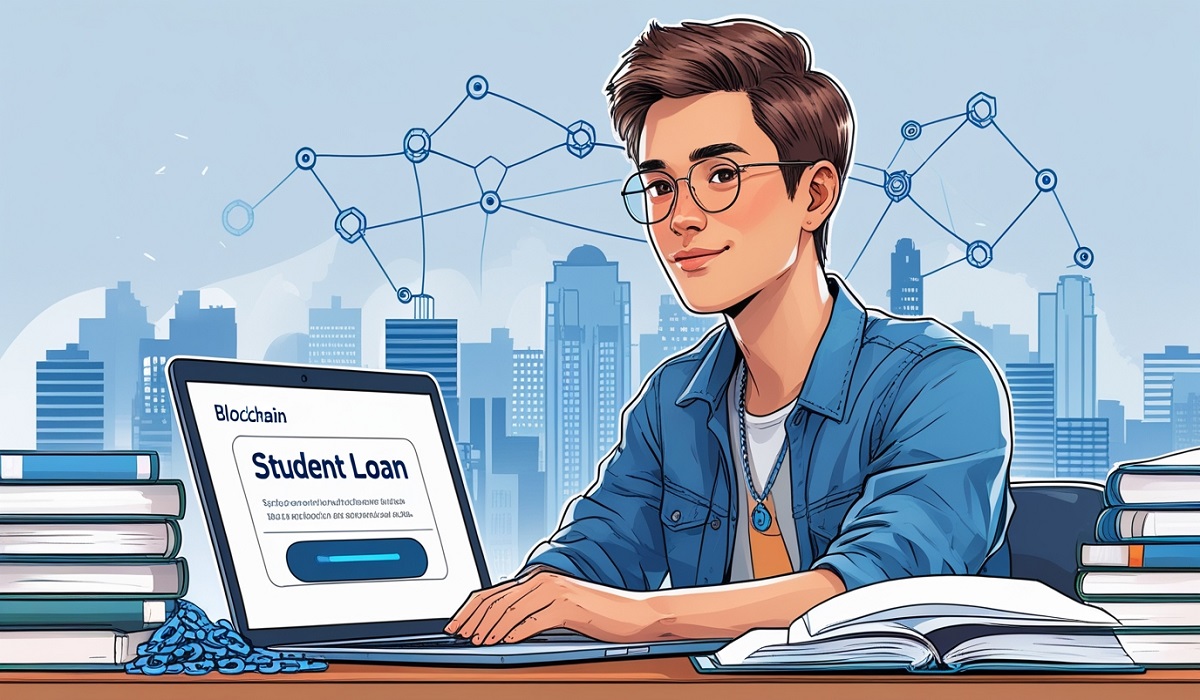
Blockchain for Student Loans
Blockchain for Student Loans: In a world where student loan debt has ballooned to a staggering $1.83 trillion, affecting over 42.8 million borrowers across the United States, innovative solutions are more critical than ever. Enter blockchain for student loans – a game-changing technology that’s poised to streamline borrowing, reduce costs, and bring transparency to an industry plagued by inefficiencies.
As we navigate 2026, with delinquency rates climbing to nearly 25% and average debt per borrower hovering around $37,000, blockchain offers a fresh path forward. This decentralized ledger system isn’t just hype; it’s already being piloted in education finance, promising faster verifications, lower fees, and empowered borrowers. In this article, we’ll dive deep into how blockchain is reshaping student loans, from peer-to-peer lending to smart contracts, and why it’s set to become a cornerstone of modern education funding.
Understanding Blockchain Technology and Its Role in Finance
Before we explore its applications in student loans, let’s break down what blockchain really is. At its core, blockchain is a distributed digital ledger that records transactions across multiple computers in a way that’s secure, transparent, and tamper-proof. Unlike traditional databases controlled by a single entity, blockchain operates on a network of nodes, ensuring no one party can alter the data without consensus.
What Makes Blockchain Ideal for Financial Transactions?
Blockchain’s key features – immutability, decentralization, and cryptography – make it perfect for finance. Transactions are verified through consensus mechanisms, reducing the need for intermediaries like banks. In 2026, with institutional adoption accelerating, blockchain is transforming everything from cross-border payments to asset tokenization. For instance, stablecoins, which are cryptocurrencies pegged to fiat currencies, are exploding in use, with new regulations like the GENIUS Act paving the way for safer, faster financial flows. This stability is crucial for volatile sectors like education finance, where predictable repayments matter.
Blockchain in Financial Services: A Broader Perspective
Beyond student loans, blockchain is revolutionizing financial services. In banking, it’s enabling real-time settlements and reducing fraud. Major banks are exploring stablecoin issuance, with groups of European and G7 institutions planning consortium-based digital currencies. Tokenization of real-world assets, like treasuries and private credit, is expected to double in 2026, bridging traditional finance with decentralized systems. These advancements set the stage for blockchain’s entry into student lending, where high administrative costs and slow processes have long been pain points.
The Current State of Student Loans in 2026: A Crisis in Numbers
Student loans remain one of the most burdensome financial obligations for Americans in 2026. The total outstanding balance has reached $1.833 trillion, with federal loans accounting for $1.693 trillion of that figure. Around 43 million people carry this debt, and the average borrower owes about $37,056. Delinquency is a growing issue; nearly 25% of borrowers with payments due are behind, a sharp rise from pre-pandemic levels. In fact, 7.9 million borrowers entered delinquency in the first three quarters of 2025 alone.
Key Statistics Highlighting the Student Debt Burden
- Total Debt Breakdown: Federal direct loans make up $1.413 trillion, with borrowers in repayment totaling 26.41 million.
- Demographic Impacts: Graduates from for-profit colleges face the highest averages at $47,730, while public school grads owe around $31,960. Many borrowers, especially Gen Z and Millennials, are delaying life milestones like homeownership – 32% report putting off buying a house due to debt.
- Economic Ripple Effects: Student debt is linked to higher stress, medical debt, and lower retirement savings. Borrowers with loans have 30% lower retirement balances on average.
Recent policy changes, like the One Big Beautiful Bill Act (OBBBA), have overhauled repayment systems and capped graduate borrowing, but challenges persist. The Department of Education is grappling with backlogs, and private lenders are stepping in amid reduced federal limits. This environment screams for innovation, and blockchain for student loans could be the answer.
How Blockchain Can Transform Student Loans?
Blockchain’s potential in student loans lies in addressing core inefficiencies: high costs, fraud, slow verifications, and lack of transparency. By decentralizing the process, it empowers borrowers and lenders alike.
Secure and Transparent Transactions in Student Lending
Traditional student loan systems rely on centralized databases prone to hacks and errors. Blockchain changes this by creating an immutable record of every transaction. For example, loan disbursements, repayments, and interest calculations can be logged transparently, visible to all parties. This reduces disputes and builds trust. In 2026, with cyber threats on the rise, blockchain’s encryption ensures data security, protecting sensitive borrower information.
Peer-to-Peer Lending Platforms Powered by Blockchain
One exciting application is peer-to-peer (P2P) lending, where individuals or institutions lend directly to students via blockchain platforms. This cuts out banks, lowering interest rates and fees. Platforms like Pencil Finance have already deployed a $1 million loan bundle on-chain through EDU Chain, backed by major investors. In a P2P model, smart contracts automate approvals based on verified credentials, making funding faster and more accessible, especially for underserved students.
Smart Contracts for Automated Repayments and Compliance
Smart contracts – self-executing code on the blockchain – can revolutionize repayments. Imagine a contract that automatically deducts payments when income thresholds are met, or adjusts rates based on real-time data. This aligns with income-driven repayment plans under OBBBA. Compliance is built-in; if a borrower defaults, the contract triggers notifications or even asset tokenization for recovery, all without manual intervention.
Tokenization of Student Loans: A New Frontier
Tokenization involves converting loans into digital tokens that can be traded or fractionalized on blockchain networks. This allows investors to buy shares in student loan portfolios, increasing liquidity. In 2026, with tokenization of assets like private credit expected to grow rapidly, student loans could follow suit. Borrowers benefit from lower rates as more capital flows in, while lenders diversify risk.
Reducing Fraud and Administrative Costs in Education Finance
Fraud in student loans costs billions annually. Blockchain’s verification tools, like digital credentials for income or enrollment, prevent fake applications. Administrative costs drop too – no more paper trails or third-party verifiers. UNICEF’s blockchain pilots in financial inclusion show how this works in practice, with transparent fund disbursements in education programs. For student loans, this could save lenders up to 20-30% in overhead.
Real-World Applications and Case Studies of Blockchain in Student Loans
While still emerging, real-world examples are gaining traction in 2026. Pencil Finance’s on-chain loan bundle via EDU Chain demonstrates how blockchain can bundle and fund student debt efficiently. In Asia, platforms are using blockchain for transparent scholarship disbursements, ensuring funds reach students without corruption.
Case Study: EDU Chain and Decentralized Education Finance
EDU Chain, a blockchain network focused on education, enables secure credential verification and funding. By tokenizing loans, it connects global investors with students, reducing barriers for international borrowers. Early adopters report 40% faster processing times.
Global Initiatives: Blockchain in Education Finance
Organizations like the Colorado Department of Higher Education are exploring blockchain for credentialing, which ties into loan eligibility. In the UK, blockchain is reshaping payments and loans in education, with pilots showing reduced costs. These cases highlight blockchain’s scalability in tackling the $1.7 trillion debt crisis.
Benefits of Blockchain for Borrowers, Lenders, and Institutions
For borrowers, blockchain means lower rates, faster access, and control over data. Lenders gain efficiency and reduced risk through automation. Educational institutions benefit from streamlined verifications, cutting administrative burdens. Overall, it fosters financial inclusion, especially for low-income students.
Empowering Borrowers with Data Ownership
Students can own their financial histories on blockchain, sharing only what’s needed for loans. This privacy boost is vital in an era of data breaches.
Cost Savings and Efficiency for Lenders
By eliminating intermediaries, lenders save on fees. Smart contracts handle collections, freeing resources for better customer service.
Challenges and Considerations in Adopting Blockchain for Student Loans
No technology is perfect. Regulatory hurdles remain; while the CLARITY Act clarifies digital assets, student loans need tailored rules. Scalability issues and energy consumption (though improving with proof-of-stake) are concerns. Adoption requires education – many borrowers aren’t tech-savvy.
Overcoming Regulatory and Technical Barriers
In 2026, expect more frameworks like the GENIUS Act to support blockchain in finance. Partnerships between fintechs and regulators will be key.
The Future Outlook for Blockchain in Student Loans
Looking ahead, blockchain could integrate with AI for personalized lending. By 2030, tokenized student loans might become standard, with global P2P networks. As debt grows, this tech offers hope for sustainable education finance.
Predictions for 2026 and Beyond
With stablecoin growth and institutional buy-in, expect pilots to scale. Banks like JPMorgan are already eyeing crypto-secured loans, a model adaptable to students.
FAQs: Common Questions About Blockchain for Student Loans
What is blockchain for student loans?
Blockchain for student loans uses decentralized ledgers to secure, automate, and transparentize borrowing and repayments, reducing costs and fraud.
How does blockchain reduce student loan debt burdens?
Through P2P lending and smart contracts, it lowers interest rates and fees, making repayments more manageable amid $1.83 trillion in total debt.
Are there real examples of blockchain in student loans in 2026?
Yes, platforms like Pencil Finance have launched on-chain loan bundles, and global initiatives are testing transparent disbursements.
What are the risks of using blockchain for student loans?
Main risks include regulatory uncertainty and technical scalability, but advancements in 2026 are addressing these.
How can blockchain improve access to student loans?
By verifying credentials instantly and enabling global P2P funding, it opens doors for underserved borrowers.
Final Thoughts and Call to Action
Blockchain for student loans isn’t just a trend – it’s a necessity in 2026’s debt-laden landscape. By fostering transparency, cutting costs, and empowering users, it could alleviate the $1.83 trillion crisis affecting millions.
To boost SEO, incorporate internal links to related posts like “Student Loan Repayment Strategies” and external links to authoritative sources such as the Department of Education or blockchain reports from Brookings. This not only improves authority but also keeps readers engaged.
Ready to explore how blockchain can transform your finances? Subscribe to our newsletter for the latest updates on education finance innovations, or contact us today to discuss personalized loan options. Don’t let debt hold you back – the future is decentralized!