
Daniel Goleman’s Emotional Intelligence Theory
Daniel Goleman’s Emotional Intelligence Theory: Emotional intelligence is a way to talk about feelings and smart thinking together. The Daniel Goleman’s Emotional Intelligence Theory made this idea popular for everyone. Before, people mainly measured smartness with IQ tests.
Daniel Goleman said knowing about feelings is just as important. His work changed how schools and businesses think about success. This article talks about Daniel Goleman’s Emotional Intelligence, focusing on what it means now. We will look at the main parts of his theory and why they still help people today. The goal is to give you useful information you can apply yourself.
The theory is not just for psychologists. Parents, teachers, managers, and anyone who works with people can use it. Daniel Goleman’s Emotional Intelligence Theory gives a map for understanding ourselves and others better.
It helps explain why some people do well in life even if they are not the top in school. It also shows why some very smart people can have trouble with friends or at work. We will go through each piece of this idea step by step.
The Core Framework: Five Parts of Emotional Intelligence
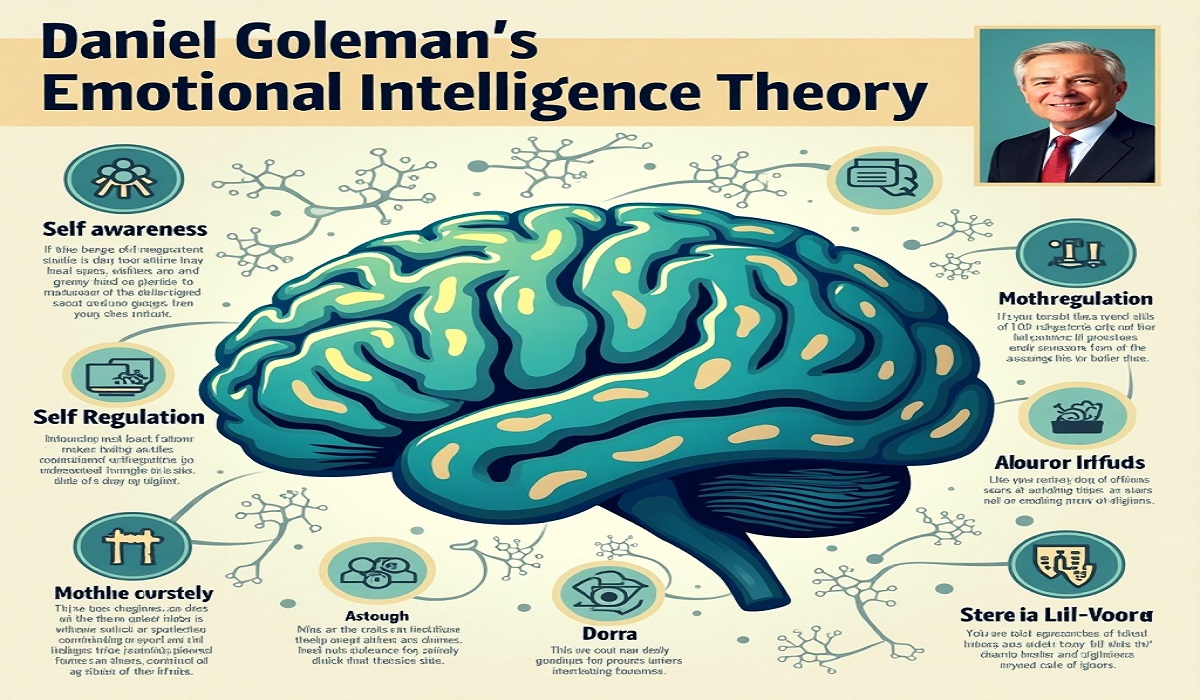
Daniel Goleman Emotional Intelligence Theory describes five different skills. These are not things you are simply born with. You can learn and improve each one with practice. They work together like a team inside a person. Think of them as tools for handling life’s social and emotional challenges. The latest views on Daniel Goleman’s Emotional Intelligence still use this framework as a strong base.
The five areas are:
- Self-awareness: Knowing what you feel and why.
- Self-regulation: Managing your feelings so they don’t control you.
- Motivation: Using your feelings to work toward goals.
- Empathy: Understanding how other people feel.
- Social Skills: Handling relationships and social situations well.
Each part supports the others. For example, you need self-awareness to practice self-regulation. You need empathy to have good social skills. Daniel Goleman’s Emotional Intelligence Theory says we must pay attention to all five. Many training programs in companies now focus on building these specific skills.
Self-Awareness: The First Step
Self-awareness means paying attention to your own emotions. It is like having a feeling thermometer in your mind. You notice when you start to get annoyed, excited, or sad. According to Daniel Goleman Emotional Intelligence, this is the most important skill. You cannot manage what you do not see. A self-aware person can say, “I am feeling very stressed right now because of this deadline.” They know the link between the event and their feeling.
This skill helps you understand your strengths and limits. A person with good self-awareness knows what makes them happy or upset. They are often more honest about their abilities. They can make better choices because they understand their emotional reactions. The latest research shows that simple habits, like writing a few sentences about your day, can build self-awareness. It is a skill you can grow over your whole life.
Self-Regulation: Managing Your Feelings
Knowing a feeling is one thing. Handling it is another. Self-regulation is about controlling your emotional reactions. It does not mean hiding your feelings. It means expressing them at the right time and in the right way.
Daniel Goleman Emotional Intelligence Theory compares it to being the captain of your emotional ship, even in a storm. You feel the wind and waves, but you still steer.
People who self-regulate well think before they act. They do not have sudden angry outbursts. They can calm themselves down when upset. And they are also more adaptable when plans change. This skill builds trust with others. Everyone likes to be around someone who is steady and reliable.
Strategies for self-regulation include taking deep breaths, going for a short walk, or reframing a problem in your mind. The latest advice in Daniel Goleman Emotional Intelligence emphasizes that this is a practice, not perfection.
Motivation: Your Inner Drive
In Daniel Goleman Emotional Intelligence, motivation comes from inside. It is about working for a goal because it matters to you, not just for a reward like money or praise. People with this skill are passionate about their work. They stay hopeful and keep trying even when things get hard. They see setbacks as chances to learn, not as failures.
This kind of motivation is very powerful. It helps people achieve more over a long time. They are not easily bored or discouraged. You can build this internal drive by setting clear personal goals. Connecting your daily tasks to a bigger purpose also helps.
The latest thinking on Daniel Goleman Emotional Intelligence Theory links this skill to resilience and a positive outlook on life. It is the fuel for long-term success.
Empathy: Understanding Others
Empathy is the ability to feel what someone else might be feeling. It is like walking in their shoes for a moment. Daniel Goleman Emotional Intelligence Theory says this is key for understanding other people’s needs. It is more than just being nice. It is a way to read the emotional cues in a room. An empathetic person notices when a coworker is worried or when a friend is secretly happy.
This skill is important for anyone who leads a team, teaches, or cares for others. It helps with communication and reduces conflicts. When people feel understood, they cooperate more. You can practice empathy by listening carefully without planning your answer. Pay attention to body language and tone of voice. The latest applications of Daniel Goleman Emotional Intelligence show empathy is critical for good leadership and strong relationships.
Social Skills: Building Relationships
This final part is about using all the other skills together in groups. Social skills mean you can manage relationships well. You can communicate clearly, resolve disagreements, and work in a team. Daniel Goleman Emotional Intelligence Theory describes this as being good at getting the best emotional response from others. It is about building a network of connections.
People with strong social skills are often good at persuading or leading. They can help a group work smoothly. They celebrate others’ successes. These skills are important in almost every job and community. You can improve them by practicing teamwork, learning how to give helpful feedback, and sharing credit for successes. The latest views on Daniel Goleman Emotional Intelligence consider this the result of all the other skills working well.
Why Daniel Goleman’s Theory Matters Today?
The world has changed a lot since Daniel Goleman first wrote about emotional intelligence. We have new technology, different jobs, and new social challenges. Yet, Daniel Goleman Emotional Intelligence Theory is more relevant than ever. In a time of quick messages and online chats, understanding emotions is a huge advantage. It helps people connect in a real way, even through a screen.
In schools, teachers use these ideas to help students work together and manage stress. In companies, managers use emotional intelligence to create better workplaces and improve teamwork. For individuals, these skills lead to stronger friendships and family life. The latest updates to Daniel Goleman’s Emotional Intelligence show it is not a soft skill, but an essential one. It is a big part of what makes people effective and happy.
Emotional Intelligence in the Digital Age
Living online makes some parts of emotional intelligence harder. It is difficult to read body language in a text message. Misunderstandings happen easily. This makes the principles of Daniel Goleman’s Emotional Intelligence Theory even more important. We must be more careful with our words. We need to be more aware that a person on the other side of the screen has real feelings.
Good self-regulation stops you from sending an angry email right away. Empathy helps you imagine how your post might affect others. Social skills help you build positive online communities. The latest discussions about Daniel Goleman Emotional Intelligence focus on applying these old skills to our new digital problems. It is a necessary guide for being human in a connected world.
How to Apply Emotional Intelligence in Daily Life?
You do not need a special title to use Daniel Goleman’s Emotional Intelligence. Everyone can practice it every day. Start with self-awareness. Once or twice a day, stop and name your feeling. Just say to yourself, “I am feeling impatient,” or “I am feeling proud.” This simple act builds that first skill. Next, when you feel a strong negative emotion, try a regulation strategy. Count to ten or take three deep breaths before you speak.
To build empathy, in your next conversation, focus only on listening. Do not think about your reply. Just try to understand the other person’s point of view. For social skills, make a small effort to thank a coworker or help a neighbor. The latest practices from Daniel Goleman’s Emotional Intelligence Theory show that small, regular actions create big changes over time. It is like building a muscle.
FAQs
What is the main point of Daniel Goleman’s Emotional Intelligence Theory?
The main point is that success in life depends on more than just book smarts (IQ). Daniel Goleman’s Emotional Intelligence Theory says our ability to understand and manage our own emotions, and to understand others’ emotions, is a major key to doing well at work, in school, and in relationships.
Can you really improve your emotional intelligence?
Yes. A key message of Daniel Goleman Emotional Intelligence is that these are skills, not fixed talents. Unlike IQ, which stays fairly stable, you can learn and improve emotional intelligence with practice, at any age. It involves changing habits and paying more attention to your feelings and interactions.
How is Daniel Goleman’s theory different from other emotional intelligence ideas?
Daniel Goleman Emotional Intelligence Theory is famous for making the idea popular and practical. He focused on five clear areas that people can easily understand. His work connected emotional intelligence directly to business and leadership, showing its value in very real-world settings.
Which of the five skills is the most important?
Daniel Goleman often highlights self-awareness as the foundation. According to his theory, you must recognize your own emotions before you can manage them or understand someone else’s. All the other parts of Daniel Goleman Emotional Intelligence depend on this first step.
Where can I learn more about the latest on this theory?
Daniel Goleman continues to write and speak about his ideas. You can find his newer books, articles, and interviews online. Look for resources that discuss updates to Daniel Goleman Emotional Intelligence Theory, especially how it applies to modern workplaces, education, and digital communication.
Final Thoughts
Daniel Goleman’s Emotional Intelligence Theory provides a lasting and useful guide for living. It breaks down a big idea about human nature into practical parts we can all work on. The five areas—self-awareness, self-regulation, motivation, empathy, and social skills—give us a clear plan for personal growth. The latest perspectives confirm that these skills are not optional. They are central to thriving in today’s world.
By learning about Daniel Goleman Emotional Intelligence, you choose to understand yourself and others on a deeper level. This understanding leads to better choices, stronger relationships, and a more satisfying life. The theory invites everyone to learn the language of emotions. It is a journey that starts with a simple question: “What am I feeling right now?” From that starting point, you can build a lifetime of emotional skill.