
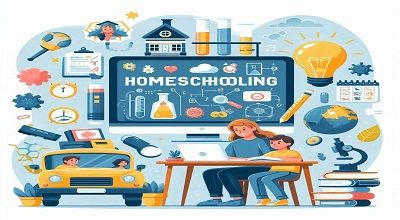
Homeschooling
Homeschooling is an educational approach where parents or guardians take on the responsibility of educating their children at home, rather than sending them to a traditional school. It involves creating a personalized curriculum and learning environment tailored to the child’s individual needs, interests, and learning pace. Homeschooling allows for flexibility in terms of what subjects are taught. How they are taught, and the schedule followed.
Here’s how homeschooling generally works:
Legal Requirements: The laws regarding homeschooling vary from country to country and even within different states or regions. Many places require parents to fulfill certain legal obligations, such as notifying the local education authorities, submitting a curriculum plan, or undergoing periodic assessments.
Curriculum Planning: Parents have the freedom to choose and design a curriculum that aligns with their child’s educational goals and interests. They can use textbooks, online resources, educational apps, and hands-on activities to cover subjects like mathematics, science, language arts, social studies, and more.
Teaching Methods: Homeschooling allows for diverse teaching methods. Parents can use traditional teaching methods, project-based learning, experiential learning, online courses, or a combination of approaches. They can adapt their teaching style to suit their child’s learning preferences and strengths.
Flexibility: One of the main advantages of homeschooling is flexibility. Families can set their own schedule, allowing for vacations during off-peak times, field trips, and more personalized attention for the child’s learning needs. Learning can take place during traditional school hours or at times that better suit the child’s natural rhythm.
Socialization: Concerns about socialization are often raised when discussing homeschooling. However, homeschooled children have opportunities to socialize through community activities, sports, co-op classes, local clubs, and online groups. Many areas also have homeschooling support networks where families can connect and organize group activities.
Assessment and Evaluation: In many places, homeschooling parents are required to provide evidence of their child’s progress. This could involve maintaining portfolios of the child’s work, taking standardized tests, participating in periodic evaluations by educational professionals, or showcasing completed projects.
Special Needs: Homeschooling can be particularly beneficial for children with special needs, as parents can tailor the curriculum and support to meet their specific requirements.
More Here,
High School and Beyond Homeschooled students can pursue a high school diploma through various means, including online accredited programs, community college courses, or preparing for standardized tests like the GED. Many colleges and universities accept homeschooled students and consider their unique experiences as part of the application process.
It’s important to note that homeschooling requires a significant commitment from parents or guardians. They need to be dedicated to providing a well-rounded education. Staying informed about educational methods and resources, and ensuring their child’s social and emotional development. Homeschooling can be a rewarding choice for families seeking an individualized and flexible educational experience, but it also requires careful planning and ongoing effort.
Is homeschooling legal in Pakistan?
Homeschooling in Pakistan existed in somewhat of a legal gray area. While there were no specific laws that explicitly prohibited homeschooling. The educational system in Pakistan was heavily regulated. H-schooling was not widely recognized or accepted by government authorities.
In Pakistan, education is primarily the responsibility of the provincial governments, so the regulations surrounding H-schooling might vary between different provinces. Some provinces had stricter regulations regarding education and required children to attend registered schools.
It’s important to note that laws and regulations can change over time, so I recommend checking with the relevant education authorities or legal experts in Pakistan for the most up-to-date information regarding the legality and regulations surrounding homeschooling in the country.
Summary
The legal status of homeschooling in Pakistan was unclear. While there were no specific laws explicitly prohibiting h-schooling. The country’s educational system was heavily regulated by provincial governments. And h-schooling was not widely recognized or accepted.
Regulations regarding education, including homeschooling, might vary between provinces. It’s recommended to consult local education authorities. Or legal experts for the most current information about homeschooling’s legality. And regulations in Pakistan, as circumstances might have changed since then.