
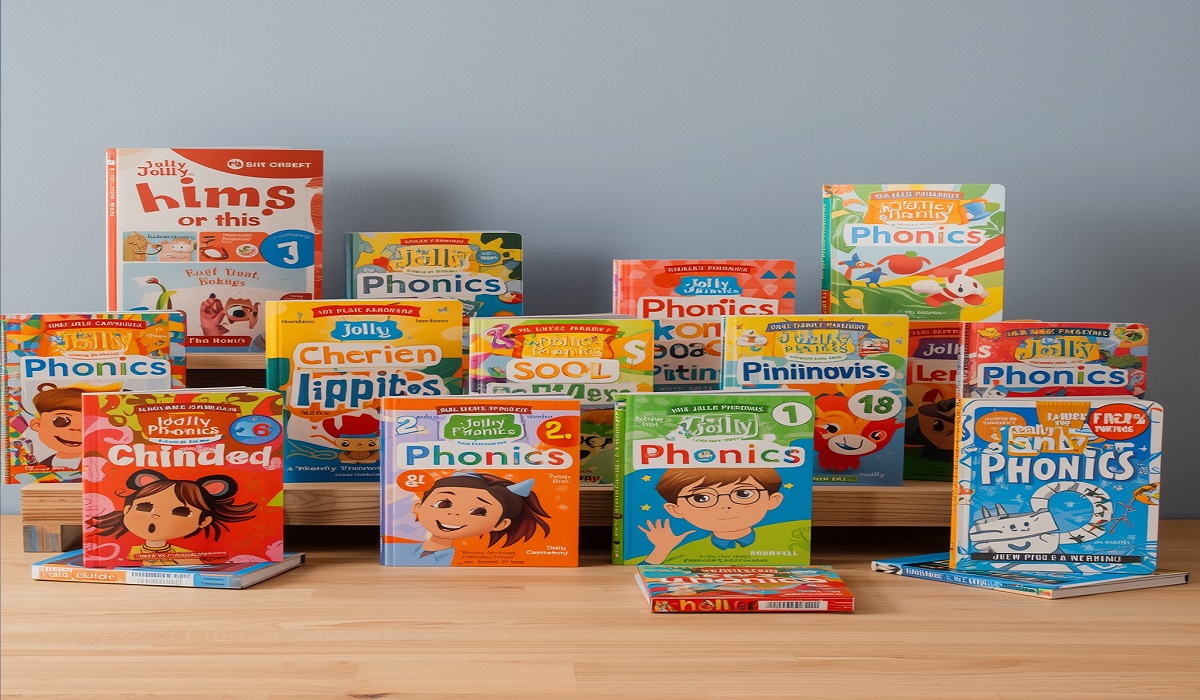
Jolly Phonics & Reading Books
Jolly Phonics & Reading Books: Learning to read is a big step for any child. It can feel like a fun puzzle or a tough challenge. The right tools make all the difference. This is where a method called Jolly Phonics & Reading Books comes into play. This approach uses sounds, actions, and stories to turn letters into words and words into stories.
It is a plan that has helped millions of children start their reading journey with a smile. This article will explain how Jolly Phonics & Reading Books work and why they are so effective for young learners. We will look at the system’s parts, its benefits, and how you can use it to support a child’s path to becoming a confident reader.
What is the Jolly Phonics Method?
Jolly Phonics is a way of teaching children how to read and write. It starts by teaching the 42 main sounds of English, not just the alphabet letters. Children learn each sound with a fun story and an action. For example, for the sound /s/, they might weave their hand like a snake and make a “ssss” noise. This multi-sensory style helps the information stick in their memory.
The program is built on five key skills. First, children learn the letter sounds. Next, they learn how to form the letters correctly. The third skill is blending, where they push sounds together to make a word, like /c/-/a/-/t/ becomes “cat.” They also learn to identify sounds in words, which is key for spelling.
Finally, they tackle “tricky words” that don’t follow the usual sound rules. Jolly Phonics & Reading Books are designed to match this exact learning order. This gives children a consistent and clear path from knowing sounds to reading whole books.
Using this method creates a strong foundation. Children gain the tools to work out new words on their own, which builds their independence. They are not just memorizing; they are learning the code of the language. This makes the first Jolly Phonics & Reading Books they pick up less scary. The children can use their new skills right away, which makes them feel proud and eager to read more.
The Structure of Jolly Phonics Reading Books
The Jolly Phonics & Reading Books are not ordinary storybooks. They are carefully written to match what a child has learned in their lessons. The books are organized into different levels, often color-coded. The first level, for example, uses only the sounds and tricky words taught in the first group of Jolly Phonics sounds. This careful control means a child can read the entire book using the knowledge they have.
Each book follows a clear pattern. New words are introduced slowly, and stories are simple and engaging. Pictures support the text but do not give away all the answers; the child must read the words to understand the story. This design builds real reading skill, not just picture guessing. The books often include questions at the end to check understanding and spark conversation about the tale.
This structured approach removes frustration. When children open their Jolly Phonics & Reading Books, they meet friends, not enemies. They can sound out the words successfully. This repeated success is powerful. It turns reading from a difficult task into an enjoyable activity. The steady increase in difficulty across the levels gently pushes their ability forward, always building on a base of known sounds and words.
Key Benefits of Using This Phonics System
Parents and teachers choose Jolly Phonics & Reading Books for clear reasons. The first major benefit is confidence. Because children can decode words independently, they feel less reliant on adults. This self-reliance fuels a positive attitude toward reading and learning in general. They start to see themselves as readers.
Another significant advantage is the improvement in spelling and writing. By learning to hear and separate sounds in words (a skill called segmenting), children can spell phonetically. They write what they hear.
While English has many tricky spellings, a strong phonetic base gives them a great starting point. The handwriting component of Jolly Phonics also means they learn to form letters correctly from the beginning, preventing later difficulties.
The system is also inclusive and adaptable. The actions and stories help children who learn best by moving or seeing pictures. It supports different learning styles in one classroom or home. Furthermore, the progression in the Jolly Phonics & Reading Books is so gradual that children with varying abilities can move at a comfortable pace. Everyone experiences success, which is the most important motivator for continued learning.
How to Introduce Jolly Phonics at Home?
Bringing Jolly Phonics & Reading Books into your home can be a joyful addition to your routine. The best way to start is to learn alongside your child. Watch the stories for the sounds and practice the actions together. Make it a game, not a lesson. You can find the official songs and animations online that make the sounds memorable.
Create a print-rich environment. Stick up the sound sheets that come with the program. When you read the Jolly Phonics & Reading Books, point to the words as you or your child reads them. This helps connect the spoken sound to the written letter. Keep sessions short and positive, just five to ten minutes of focused time is often enough for a young learner.
Most importantly, follow your child’s lead. If they are tired, stop. Celebrate their effort, not just perfect results. Let them choose which Jolly Phonics & Reading Book to read from their level. Your role is to be an encouraging guide, providing support when they hit a difficult word by prompting them to use their blending skills. Your calm patience will make home a safe place to practice.
Comparing Jolly Phonics to Other Reading Programs
Many programs teach children to read. What sets Jolly Phonics & Reading Books apart? Some methods focus on memorizing whole words (the “look and say” method). While useful for irregular words, this can be limiting. Jolly Phonics gives children a tool for thousands of words by teaching the phonetic code.
Other phonics programs may teach the sounds but not in such a child-friendly, multi-sensory way. The inclusion of stories, actions, and songs in Jolly Phonics makes abstract sounds concrete and fun. The tight integration between the taught sounds and the decodable Jolly Phonics & Reading Books is also a standout feature. The practice material matches the lesson exactly, which is not always the case with other systems.
Furthermore, Jolly Phonics is systematic and comprehensive. It covers all the main sounds, including digraphs like /sh/ and /th/, in a clear order. The Jolly Phonics & Reading Books then reinforce this sequence. This creates a complete literacy framework from the ground up, whereas other resources might only cover parts of the process.
Selecting the Right Jolly Phonics Materials
Starting with Jolly Phonics & Reading Books requires the correct materials. The core kit typically includes a teacher’s handbook, student workbooks, sound cards, and the decodable readers. For home use, you might begin with the workbooks and the first set of Jolly Phonics & Reading Books. The handbook is very helpful for understanding the method.
Ensure you are getting the official materials. Look for the official publisher, Jolly Learning. Their resources are carefully designed to work together. The Jolly Phonics & Reading Books are numbered and color-coded by level. Starting at the very beginning, even if it seems easy, builds a rock-solid foundation and a habit of success.
You can also supplement with additional resources. Magnetic letters for blending, online games from the official site, and flashcards can add variety. However, the simple, consistent use of the workbooks and the Jolly Phonics & Reading Books is often the most effective path. Too many extras can become confusing and distract from the core, systematic practice.
Addressing Common Challenges in Early Reading
Every child learns at their own pace, and hurdles are normal. One common challenge is blending. A child might know /c/, /a/, and /t/ but struggle to say “cat.” To help, model “sound-talk.” Say the sounds slowly and then faster until they blend. Use your arm, tapping at your shoulder for the first sound, elbow for the next, and wrist for the last, then sweep your hand down your arm to blend them.
Another issue is letter confusion, like mixing up ‘b’ and ‘d.’ The actions and stories in Jolly Phonics help with this. The action for /b/ is pretending to hit a ball with a bat, while /d/ is playing a drum. Referring to the story and action can jog their memory. Patience and gentle, consistent correction are key.
For children who find reading laborious, keep sessions light. Reread familiar Jolly Phonics & Reading Books to build fluency and confidence. Let them listen to audiobooks for the pleasure of stories. The goal is to maintain a love for stories while their technical skill catches up. Jolly Phonics & Reading Books provide the structured practice to overcome these challenges step-by-step.
The Role of Teachers and Parents in Phonics Success
The partnership between home and school magnifies the power of Jolly Phonics. When teachers use the method in class and parents understand it, the child gets consistent messages. Communication is vital. Teachers can share which sounds and Jolly Phonics & Reading Books the class is using, so practice at home can align.
Parents play the role of the cheerleader. Your job is not to formally teach but to provide opportunities. Listen to your child read their Jolly Phonics & Reading Books regularly. Show interest in the stories. Point out words in the world that use sounds they know—like “shop” having the /sh/ sound. This shows them that phonics is useful everywhere.
Teachers, meanwhile, use the program’s structure to ensure no child falls behind. They can spot who is struggling with blending or a specific sound and provide extra help. Using the Jolly Phonics & Reading Books in small groups allows them to give targeted support. This teamwork between guided instruction at school and supportive practice at home creates the ideal environment for literacy to flourish.
Measuring Progress with Jolly Phonics
Seeing progress keeps children and adults motivated. With Jolly Phonics, progress is clear and measurable. You can see it when a child correctly learns a new group of sounds. You hear it when they successfully blend a word for the first time. The most tangible sign is when they finish reading a Jolly Phonics & Reading Book all by themselves.
Use the materials as a progress map. The workbooks show what sounds and letter formations they have learned. The levels of the Jolly Phonics & Reading Books act as milestones. Moving from the red level to the yellow level is a concrete achievement to celebrate. Keep a list of “tricky words” they can now read on sight.
Avoid comparing children to each other. The journey through Jolly Reading Books is personal. Focus on a child’s own growth. Praise specific efforts: “I saw how you worked out that new word by blending!” This reinforces the strategies they are learning. The system’s structure naturally highlights progress, turning the complex journey of learning to read into a series of small, celebrated wins.
FAQs About Jolly Phonics & Reading Books
What age is best to start Jolly Phonics?
Children can often begin the basics of Jolly Phonics around ages 3-4, starting with the sounds and actions. The formal reading and writing with the workbooks and the first Jolly Phonics & Reading Books typically suits ages 4-6. The program can also help older children who need support with reading fundamentals.
Can I use Jolly Phonics if English is not our first language?
Yes. Jolly Phonics teaches the sounds of English clearly, which can be very helpful for second language learners. The actions provide a memory aid, and the structured Jolly Phonics & Reading Books offer controlled practice. It is a strong foundation for English literacy.
How long does it take to complete the Jolly Phonics program?
In a school setting, teachers often spread the teaching of the 42 main sounds over a school year. Working through the accompanying Jolly Phonics & Reading Books continues beyond that. At home, pace depends on the child. Moving steadily without rushing, ensuring mastery at each step, is most important.
Do the books include interesting stories, or are they just for practice?
The Jolly Phonics & Reading Books are designed for practice, but the writers craft simple, engaging narratives within the limits of the sounds. Children follow characters like Inky Mouse and Bee, and the stories have humor and plot, making the practice more enjoyable than reading random sentences.
Where can I buy authentic Jolly Phonics materials?
The official resources are sold through the publisher, Jolly Learning, and their authorized distributors. Visit the Jolly Learning website to find the official workbooks, handbooks, and full sets of Jolly Phonics & Reading Books to ensure you get the correct, high-quality materials.
Conclusion
The path to reading is one of the most important journeys a child will take. Jolly Phonics & Reading Books provide a map, a toolkit, and friendly companions for this adventure. By breaking language down into manageable sounds and building it back up through engaging stories, this method builds more than skill—it builds confidence.
It turns the mystery of printed words into a solvable, enjoyable puzzle. For parents and teachers looking for a proven, structured, and child-centered approach, integrating Jolly Reading Books into early learning offers a powerful way to help young readers find their footing and their voice. The goal is not just reading the words on a page, but opening the door to a lifelong love of stories and learning.