
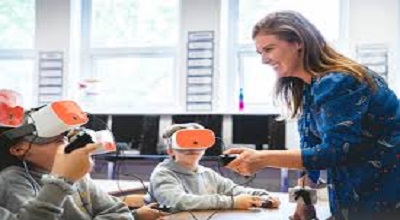
VR for Professional Development
VR for Professional Development: Virtual Reality (VR) has evolved from a gaming novelty to a powerful tool for professional development. Industries such as healthcare, education, engineering, and corporate training are leveraging VR to provide immersive, hands-on learning experiences. Unlike traditional training methods, VR allows professionals to practice real-world scenarios in a risk-free environment, improving retention and engagement.
According to a 2023 report by PwC, employees trained with VR are 4 times faster to train than in traditional classrooms and 275% more confident in applying learned skills. This makes VR a game-changer in professional development.
How VR Enhances Professional Training?
Immersive Learning Experiences
VR creates realistic simulations where professionals can interact with 3D environments, enhancing muscle memory and decision-making skills.
Safe and Controlled Practice
High-risk professions (e.g., surgeons, pilots, firefighters) use VR to practice dangerous procedures without real-world consequences.
Personalized Training Modules
AI-driven VR programs adapt to individual learning paces, providing customized feedback and assessments.
Cost and Time Efficiency
VR reduces the need for physical training setups, travel, and instructor-led sessions, saving organizations significant costs.
Latest VR Technologies for Professional Growth
Meta Quest 3 & Apple Vision Pro
These headsets offer high-resolution displays, hand tracking, and mixed reality (MR) capabilities for seamless professional training.
AI-Powered VR Simulations
Platforms like Strivr and Talespin use AI to analyze trainee performance and provide real-time coaching.
Haptic Feedback Suits
Devices like Teslasuit provide tactile feedback, making VR training more realistic for medical and industrial applications.
Cloud-Based VR Training
Companies like PixoVR enable scalable VR training accessible from anywhere, reducing hardware dependency.
Real-World Examples of VR in Professional Development
Medical Training (Osso VR)
Surgeons practice complex procedures in a virtual OR, improving precision and reducing errors.
Aviation (Boeing & Airbus VR Piloting Sims)
Pilots train in hyper-realistic flight simulations, preparing for emergencies without real-world risks.
Corporate Leadership (VirtualSpeech)
Executives enhance public speaking and negotiation skills through AI-driven VR role-playing.
Engineering & Construction (Bentley Systems)
Engineers use VR to visualize and troubleshoot infrastructure projects before construction begins.
Retail & Customer Service (Walmart’s VR Training)
Employees practice handling difficult customers and managing store operations in virtual scenarios.
Benefits of Using VR for Skill Development
✅ Higher Engagement & Retention (Learners remember 75% of VR content vs. 10% from reading)
✅ Real-Time Feedback & Analytics
✅ Scalable Across Industries
✅ Reduces Training Costs Long-Term
Challenges and Limitations of VR Training
❌ High Initial Setup Costs
❌ Motion Sickness for Some Users
❌ Limited Content for Niche Industries
❌ Requires Technical Expertise
Future Trends in VR for Professional Development
- Wider Adoption of Mixed Reality (MR)
- 5G-Enabled Cloud VR Training
- Neuroadaptive VR (Brain-Computer Interfaces)
- More AI-Driven Personalized Learning
How to Integrate VR into Your Professional Training?
- Identify Training Needs – Which skills need VR simulation?
- Choose the Right Hardware/Software – Meta Quest 3, HTC Vive, or Pico?
- Develop or Source VR Content – Use platforms like EngageXR or custom solutions.
- Pilot Test & Gather Feedback
- Scale Across the Organization
Conclusion
VR is revolutionizing professional development by offering immersive, efficient, and engaging training solutions. As technology advances, VR will become more accessible, further transforming how industries upskill their workforce.