
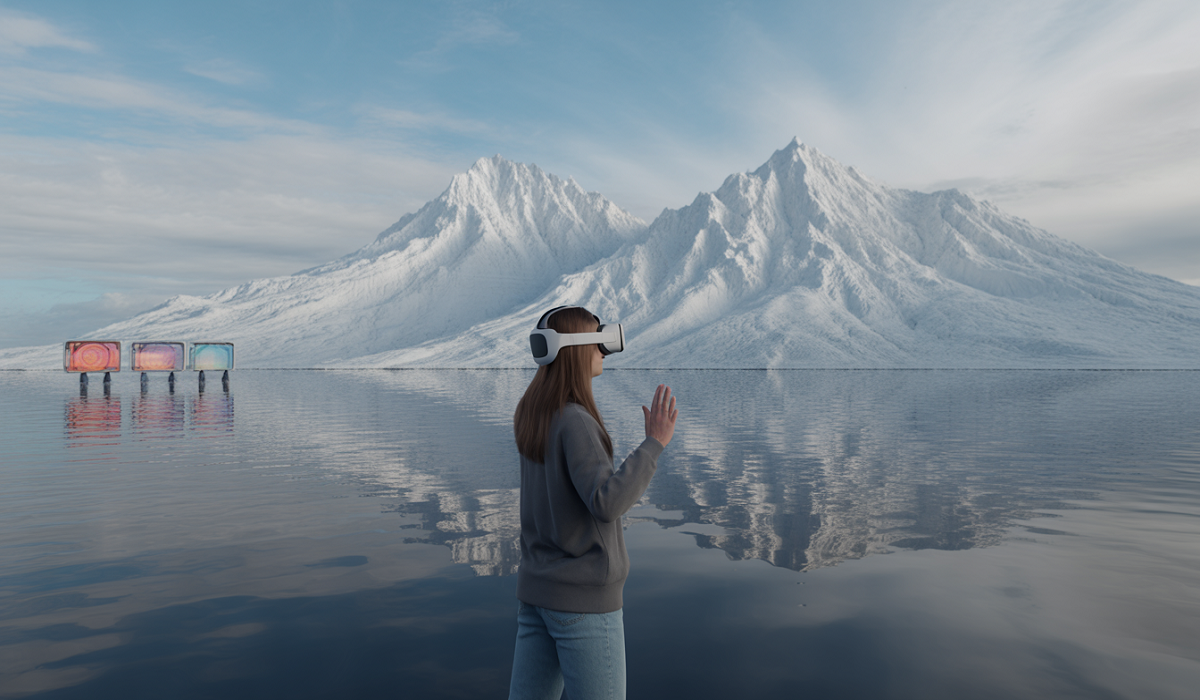
VR Immersive Climate Change Simulations for Grade 9
VR Immersive Climate Change Simulations for Grade 9: Imagine stepping into a virtual world where you stand on a shrinking glacier in the Austrian Alps. Watching ice melt in real time as temperatures rise before your eyes. Or floating above Earth, zooming into data visualizations that show exactly how our choices today will shape 2099. For ninth-graders in 2026, this isn’t science fiction—it’s everyday classroom reality thanks to VR immersive climate change simulations for grade 9.
These cutting-edge tools are turning abstract lessons about rising seas, extreme weather, and carbon cycles into hands-on experiences that stick. As someone who’s tracked education technology trends for over a decade, I can tell you: 2026 marks a tipping point. With the VR in education market projected to hit around $37.66 billion this year (growing at a steady 20.4% CAGR). Schools are finally scaling immersive tools that make climate science unforgettable for 14- and 15-year-olds.
In this comprehensive guide, we’ll explore everything from the top simulations available right now to proven benefits, practical integration tips, and what the future holds. Whether you’re a teacher, parent, or curriculum planner. You’ll walk away with actionable insights to bring VR immersive climate change simulations for grade 9 into your world.
What Are VR Immersive Climate Change Simulations?
At their core, VR immersive climate change simulations place students inside realistic 3D environments where they can interact with climate phenomena. Unlike watching a video or reading a textbook, learners wear a headset and physically explore. Walking across melting permafrost, manipulating IPCC projection models, or witnessing coral bleaching up close.
The magic comes from full immersion: 360-degree views, spatial audio (cracking ice, rising wind), haptic feedback, and interactive elements. In 2026, these simulations run smoothly on affordable standalone headsets like the Meta Quest 3S or PlayStation VR2, with no clunky PCs required for many experiences.
Key features making them perfect for grade 9 include age-appropriate scaffolding—guided tours for beginners, open exploration for advanced students—and curriculum alignment with Next Generation Science Standards or equivalent frameworks covering Earth systems, human impacts, and sustainability.
Why Grade 9 Students Specifically Benefit from VR Climate Simulations in 2026
Ninth grade sits at a critical crossroads. Teens this age are developing abstract thinking, grappling with global issues, and forming lifelong values. Traditional lectures often leave them disengaged—studies consistently show climate anxiety without action pathways. VR flips the script by making the invisible visible and the distant personal.
Recent 2025 Stanford research found VR experiences significantly reduce indifference to faraway climate impacts compared to static images, helping students form emotional connections that motivate real-world action. For grade 9, this means moving beyond “I know climate change is bad” to “I see how my community connects to melting glaciers half a world away.”
Plus, with 67% of high school teachers in 2026 surveys saying they want regular VR use and 82% rating XR content as high-quality, the timing couldn’t be better. Adoption has exploded—by the end of the 2025-2026 school year, platforms like Prisms VR alone reached 270,000 U.S. students across 233 districts with 42,000 headsets deployed.
Top VR Immersive Climate Change Simulations for Grade 9 in 2026
Here are the standout options educators are raving about this year:
Sony’s Climate Station (Free on PS5 and PS VR2) Launched in mid-2025 and now a classroom staple, this free experience turns complex data into an interactive story. Students explore three acts:
- Weather Year – Relive 2019’s extreme events with interconnected systems.
- Observations – Dive into 120 years of NASA, NOAA, and Berkeley Earth temperature records.
- Projections – Use IPCC-approved models to test low, medium, and high emissions scenarios out to 2100, watching soil moisture, biodiversity, and sea levels shift in real time.
A 90-minute Explainer Library with narration by meteorologist Laura Tobin makes it teacher-friendly. Perfect for grade 9: free, multiplayer-capable in education mode, and available globally. Schools with PS5 access love using it for whole-class discussions.
Freeze For Future Glacier VR Experience Co-created by 380 Austrian and German high school students with University of Innsbruck researchers (finalized 2025), this VR field trip lets users teleport through seven stations in the Gaisberg Valley. Time-leap from 1850 Little Ice Age moraines to today’s retreating glacier, hear student-narrated audio, and explore “beyond reality” elements like inaccessible slopes. Targeted at grades 5–12, it directly ties into geoscience and sustainability curricula while building systems-thinking skills.
Prisms VR Climate-Linked Modules While primarily math and science, Prisms’ spatial simulations include real-world scenarios like calculating flood barriers for climate-driven sea level rise or modeling wastewater treatment impacts. With embodied learning (students physically move through scenarios), retention soars. Already proven at scale in 2026 classrooms.
Other strong contenders include extended Google Earth VR climate layers and emerging 360° ocean acidification experiences from research programs.
How These Simulations Drive Real Learning Gains?
Data from 2026 implementations speaks volumes. Students using VR immersive climate change simulations for grade 9 show:
- Higher engagement: 4x more time spent exploring compared to textbook lessons.
- Better retention: Knowledge gains about ocean acidification and glacier dynamics persist weeks longer (echoing earlier controlled studies now scaled classroom-wide).
- Increased empathy and action: VR users report stronger pro-environmental intentions—supporting policies, reducing personal waste, and joining clubs. One Italian secondary school program combining VR with GIS saw measurable behavior shifts.
- Equity boost: Every student “visits” remote sites regardless of zip code or mobility.
Teachers note quieter classrooms full of focused “oohs” and “whoas,” with post-VR discussions diving deeper into solutions.
Step-by-Step: Integrating VR into Your Grade 9 Climate Unit
- Assess hardware – Start small with a 6–12 headset ClassVR or Knox Labs kit (Meta Quest 3S models run ~$300 each; full classroom kits available).
- Align to standards – Map Sony Climate Station’s Projections act to your unit on human impacts and feedback loops.
- Lesson flow: 10-min pre-brief → 20–30 min VR exploration (pairs or rotations) → 15-min debrief with reflection questions → project-based follow-up (design local climate action plan).
- Differentiation – Provide guided paths for struggling learners; challenge advanced students to manipulate variables in projections.
- Assessment – Use built-in analytics (time spent, interactions) plus traditional quizzes and student-created videos explaining what they experienced.
Overcoming Common Challenges in 2026
Cost: Entry-level headsets have dropped; a basic 10-pack runs under $4,000 with financing options. Free software like Climate Station keeps ongoing expenses low. Equity & Access: Rotate groups, offer after-school clubs, and partner with libraries. Many simulations work in mixed-reality mode for students sensitive to full immersion. Teacher Prep: 1–2 hour training suffices for most platforms. Built-in teacher dashboards simplify management. Safety: Modern headsets include comfort features and session timers; hygiene kits are standard.
The Road Ahead for VR Climate Education
By 2027 and beyond, expect AI-personalized scenarios (your town’s projected 2050 flood risk) and multi-user global collaborations where grade 9 classes in Pakistan and Pennsylvania jointly model solutions. The foundation built in 2026 will prepare today’s teens to lead the transition.
FAQs About VR Immersive Climate Change Simulations for Grade 9 in 2026
What is the best free VR immersive climate change simulation for grade 9 students in 2026?
Sony’s Climate Station stands out—completely free on PS5/PS VR2 with rich IPCC data and stunning visuals perfect for 14–15-year-olds.
How much do VR headsets cost for a grade 9 classroom in 2026?
Standalone options like Meta Quest 3S start around $300 per unit. School kits with charging carts and hygiene covers range $2,500–$12,000 depending on size, with many grant programs available.
Do VR simulations actually improve climate science test scores for ninth graders?
Yes. Multiple 2025–2026 studies show significant knowledge gains and longer retention versus traditional methods,. Especially on complex topics like feedback loops and projections.
Are there student-created or co-designed VR climate experiences suitable for grade 9?
Absolutely—the Freeze For Future glacier VR was built with high school students and includes their voices and ideas, making it incredibly relatable.
Can parents support VR immersive climate change learning at home?
Yes! Download Climate Station for free if you have a PS5, or explore browser-based 360° experiences on phones with cheap cardboard viewers. Discuss what your child “saw” to reinforce learning.
Ready to Make Climate Education Unforgettable?
The evidence is clear: VR immersive climate change simulations for grade 9 in 2026 aren’t just flashy tech—they’re the most effective way to build informed, empowered young citizens ready to tackle our planet’s biggest challenge.
Teachers, talk to your administrators about piloting a Climate Station session this semester. Parents, ask your school what VR resources they offer. Districts, explore grant-funded ClassVR or Prisms partnerships.
Download Sony Climate Station today at the PlayStation Store (free) and start exploring. Or visit reputable partners like NASA Climate Kids for complementary resources. The future is immersive—let’s step into it together and give our ninth-graders the tools they deserve.