
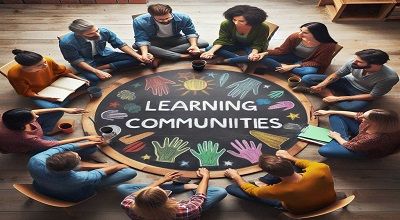
Evolution of Learning Communities
The evolution of learning communities has been influenced by technological advancements. Changes in educational paradigms, and the growing recognition of the importance of collaboration and community in the learning process. Here’s a brief overview of the evolution of learning communities:
Traditional Learning Communities:
- Historically, learning communities were primarily localized to physical spaces. Such as classrooms, where students and educators interact face-to-face.
- These communities were often limited to a specific academic institution or geographical location.
Distance Learning and Correspondence Courses:
- With the advent of technology, distance learning, and correspondence courses emerged, allowing individuals to access education from remote locations.
- However, these early forms lacked the real-time interaction and sense of community found in traditional settings.
Online Learning Platforms:
- The rise of the internet led to the development of online learning platforms, offering courses and resources that learners could access from anywhere.
- Forums and discussion boards became essential components for fostering interaction and community among learners.
Social Media Integration:
- Social media platforms played a significant role in the evolution of learning communities. Educators and learners began using platforms like Facebook, Twitter, and LinkedIn to connect, share resources, and discuss topics.
- This facilitated broader and more informal learning communities beyond the confines of structured courses.
Massive Open Online Courses (MOOCs):
- MOOCs brought a new scale to online learning. Allowing thousands of learners worldwide to participate in a single course simultaneously.
- MOOCs incorporated features like discussion forums, peer grading, and collaborative projects to enhance the sense of community.
Personalized Learning and Adaptive Platforms:
- The evolution of learning communities also involves a shift towards personalized learning experiences. Adaptive learning platforms use data and algorithms to tailor educational content to individual learners, promoting a more customized approach.
- Gamification and interactive elements are integrated into many platforms to engage learners and foster a sense of community.
Remote and Hybrid Learning:
- Recent global events, such as the COVID-19 pandemic, accelerated the adoption of remote and hybrid learning models. Virtual classrooms, video conferencing, and collaborative tools became central to the learning experience.
- Learning communities adapted to this shift by leveraging technology to maintain engagement and connection among students and educators.
Emergence of Niche Communities:
- Learning communities have become more specialized, catering to specific industries, skills, or interests. Niche communities provide a targeted and focused environment for individuals with shared goals.
Blockchain and Credentialing:
- Blockchain technology is being explored to secure and verify educational credentials. Fostering trust within learning communities.
- Digital badges and certificates are gaining popularity as alternative forms of credentialing, allowing learners to showcase their achievements within their communities.
Augmented and Virtual Reality:
- The integration of augmented reality (AR) and virtual reality (VR) technologies is expanding the possibilities for immersive learning experiences, bringing a new dimension to virtual learning communities.
Summary
In summary, the evolution of learning communities reflects a dynamic interplay between technological advancements. Pedagogical shifts, and the changing landscape of education. The ongoing integration of emerging technologies continues to shape the way individuals connect, collaborate, and learn within these communities.