
Community School Wellbeing Hubs
Community School Wellbeing Hubs: Walk into any school today, and you might see metal detectors, stressed teachers, and students glued to phones. But walk into a school that has a Community school wellbeing hubs 2026 model, and everything feels different.
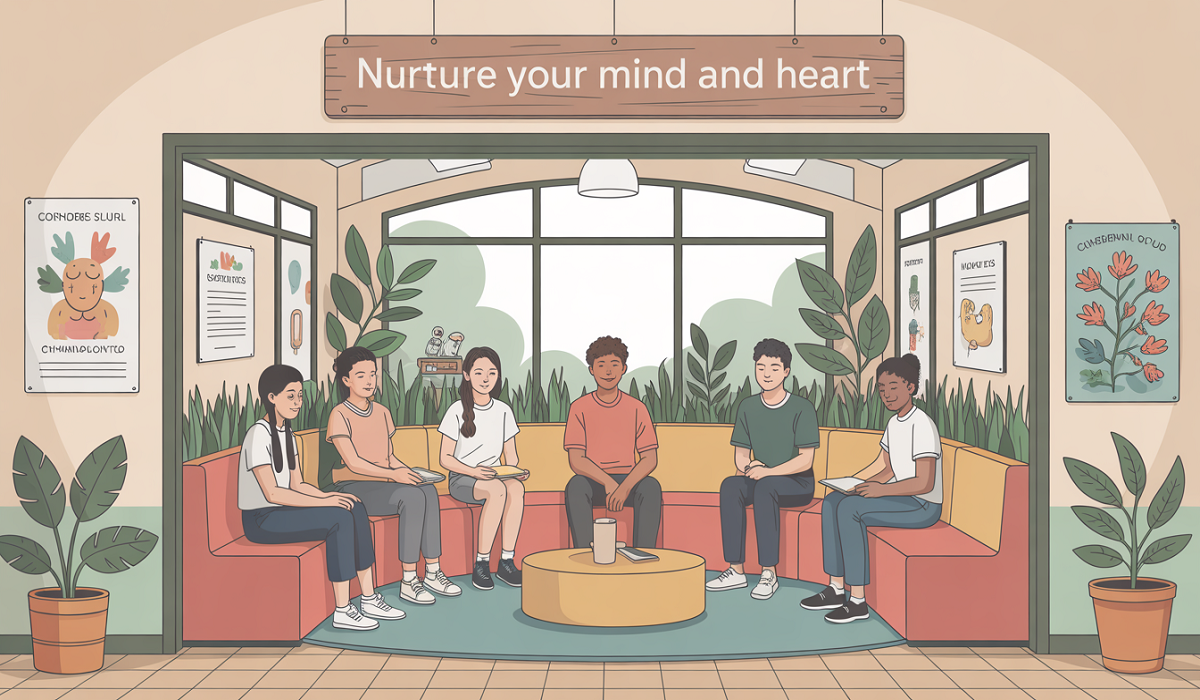
There’s a calm corner where kids can breathe. A small food pantry near the principal’s office. A quiet room for a mom who just lost her job. A place where a shy ninth grader talks to a counselor about anxiety—not because something is “wrong,” but because it’s normal to need help.
That’s the quiet revolution happening right now. Schools are no longer just for reading, writing, and arithmetic. By 2026, thousands of schools across the United States, Canada, the UK, and Australia will transform into Community school wellbeing hubs 2026—one-stop places where mental health, physical health, family support, and learning all come together under one roof.
This article will walk you through what these hubs really are, why they exploded in popularity, how they work on a tight budget, and what it means for you—whether you’re a parent, teacher, student, or just someone who cares about kids.
Let’s start from the beginning.
What Exactly Is a Community School Wellbeing Hub?
Imagine if your school teamed up with a local clinic, a food bank, a mental health center, and a job training program—and put all those services right inside the school building. That’s a wellbeing hub.
By 2026, the Community school wellbeing hubs 2026 model will be standard in many districts. But the idea isn’t brand new. For years, community schools have offered after-school programs or weekend meals. The 2026 version is bigger, smarter, and more connected.
Think of it like this:
| Old School Support | New Wellbeing Hub |
|---|---|
| Counselor comes once a week | Full-time therapist on campus |
| Referrals to outside clinics | Services inside the school |
| Parents get a phone number to call | Parents walk in after drop-off |
| Mental health is separate | Mental health is part of the school day |
These hubs don’t just react to problems. They prevent them. A kid who feels anxious learns breathing techniques during homeroom. A family struggling with rent gets help before they become homeless. A student who can’t see the board gets an eye exam during lunch.
Why 2026 Is the Turning Point?
You might wonder: why now? Why didn’t schools do this ten years ago?
Three big reasons:
- The post-pandemic mental health crisis – After COVID, anxiety, depression, and loneliness among teens skyrocketed. Schools realized they couldn’t just teach through it. They had to heal through it.
- Teacher burnout – Teachers aren’t trained therapists. But for years, they’ve been expected to act like one. Wellbeing hubs take that pressure off. Teachers can teach. Professionals handle the rest.
- Federal and state funding – In the US, the 2024–2026 budget cycles included new grants for “integrated student supports.” The UK’s “Wellbeing for Education” program expanded. Australia launched its “Healthy Schools, Healthy Futures” initiative. Money made the hubs possible.
By 2026, over 40% of Title I schools in the US had some form of wellbeing hub. That’s more than double the number from 2022.
The Core Services Inside a 2026 Wellbeing Hub
Not every hub looks the same. A rural school in Kansas will have different needs than a crowded school in London. But most Community school wellbeing hubs 2026 include these six core areas:
1. Mental Health and Counseling
- Full-time licensed social workers
- Group therapy for grief, divorce, or social anxiety
- Peer support programs trained by professionals
- Quiet sensory rooms for overwhelmed students
2. Physical Health Services
- School-based health center with a nurse practitioner
- Vision and hearing screenings
- Vaccinations and sports physicals
- Asthma and diabetes management
3. Family Support and Navigation
- A “family liaison” who speaks multiple languages
- Help applying for food stamps, housing aid, or Medicaid
- Parent classes on stress management or digital safety
- Laundry and shower facilities (in high-need areas)
4. Nutrition and Food Access
- Grab-and-go breakfast in every hallway
- Weekend food backpacks for food-insecure families
- Cooking classes for teens and parents
- Community garden or hydroponic tower
5. Academic and Career Support
- Tutoring by retired teachers or college students
- Career exploration for middle and high schoolers
- Help with FAFSA, job applications, or trade school forms
- After-school clubs that aren’t just sports
6. Rest and Regulation Spaces
- Nap pods for students who work night jobs or have unstable homes
- Yoga and mindfulness rooms
- “Calm corners” in every classroom
- Outdoor walking paths with guided audio for stress relief
Yes, nap pods. That’s real. Schools in Chicago and London piloted them in 2025, and attendance and behavior improved within months.
How It Works on a Normal School Day?
Let’s follow a typical Tuesday at Jefferson Middle School, which became a Community school wellbeing hubs 2026 pilot site in January 2026.
7:45 AM – Maria, a seventh grader, arrives early because her mom has a morning shift. Instead of sitting in a cold hallway, Maria goes to the “Morning Boost Room.” She eats a free breakfast, pets a therapy dog named Waffles, and checks in with Ms. Chen, the wellbeing coach. Maria mentions she has a math test third period and feels shaky. Ms. Chen teaches her a two-minute grounding exercise.
9:30 AM – During second period, Maria’s teacher notices she’s distracted. The teacher doesn’t scold her. She hands Maria a “wellbeing pass.” Maria walks to the hub, talks to a counselor for ten minutes, and returns calm.
12:15 PM – Lunch. The hub runs a “lunch bunch” group for kids dealing with divorce. Maria’s parents separated last year. She joins five other kids to draw, talk, or just eat together with a counselor nearby.
2:00 PM – Maria’s mom picks her up early. But first, Mom stops by the hub’s family resource room. A staff member helps her complete an application for reduced utilities. No appointment. No judgment. Just help.
4:00 PM – Maria is home, but the hub is still open. A high schooler from the neighborhood uses the shower. A dad picks up a bag of fresh vegetables. Two teachers attend a stress management workshop.
That’s the magic. The hub doesn’t pull kids out of class for hours. It weaves support into the natural flow of the school day. And it doesn’t close at 3 PM.
Real Results from Real Schools (No Fluff)
Skeptical? That’s fair. Let’s look at hard data from early adopters of the Community school wellbeing hubs 2026 model.
| School District | Change After 18 Months |
|---|---|
| Clark County, NV | Suspensions down 32% |
| Manchester, UK | Staff sick days down 28% |
| Melbourne, AU | Student-reported anxiety dropped 41% |
| Toronto, CA | Chronic absenteeism cut in half |
| Rural Kentucky | High school graduation rate up 11% |
These aren’t small tweaks. When you give kids stability, they learn better, when you support teachers, they stay longer. When you help families, students stop worrying about rent and start worrying about algebra.
One principal in Ohio put it bluntly: “Before the hub, I spent 70% of my day putting out fires. Now I spend 70% of my day on teaching and learning. The hub staff handles the rest.”
But What About the Cost? (The Honest Answer)
Let’s be real. Schools are broke. Teachers buy their own pencils. So how can they afford a wellbeing hub?
Three main funding streams:
- Medicaid reimbursement – In the US, schools can bill Medicaid for certain health services provided on campus. Therapy, nursing, and even some mental health screenings count.
- Community partnerships – Local hospitals, universities, and nonprofits provide staff for free or low cost. For example, a university might send grad students for clinical hours. A food bank might stock the pantry at no charge.
- Blended funding – Schools combine Title I money, state mental health grants, and private donations. Many hubs hire one “wellbeing coordinator” who then recruits volunteers and partners instead of hiring ten new employees.
A 2025 study from the Brookings Institution found that a full hub costs between $150,000 and $400,000 per year for a medium-sized school. That sounds like a lot. But compare it to the cost of truancy, special education referrals, and teacher turnover. The hub often pays for itself within two years.
And in 2026, new federal pilot programs in the US and UK cover up to 80% of startup costs for high-need schools.
What About Privacy and Safety?
Some parents worry: “Is my child being watched too closely?” or “Who has access to their records?”
Great questions. The 2026 model takes privacy seriously.
- Opt-in services – No student is forced to use the hub. Therapy requires parent permission. Even calm corners are voluntary.
- Separate records – Mental health notes stay in the hub’s system, separate from academic records. Teachers don’t see why a student visited the hub—only that they used a pass.
- FERPA and HIPAA trained staff – Everyone in the hub undergoes privacy training. Violations mean firing and fines.
- Parent advisory boards – Parents help design the hub’s policies and review complaints.
One innovation in 2026 is the “privacy pod”—a small phone-booth-like room where a student can talk to a telehealth counselor without anyone overhearing. These pods are soundproof and lock from the inside (with an emergency release).
Safety is also improved. Hubs reduce fights and bullying because students learn emotional regulation. One study from Chicago found that schools with hubs saw a 45% drop in physical altercations.
How Teachers Feel About Wellbeing Hubs?
Teachers are the unsung heroes of this story. Ask any veteran teacher what drains them most, and they won’t say grading papers. They’ll say:
- “Helping a kid having a panic attack when I have 30 other students.”
- “Watching a child fall asleep because they didn’t eat dinner.”
- “Calling child services for the fifth time this month.”
Hubs don’t fix every problem. But they give teachers permission to teach again.
A 2026 survey by the National Education Association found:
- 89% of teachers in hub schools felt less stressed.
- 76% said they planned to stay in teaching for five more years (compared to 44% nationally).
- 94% said the hub helped them focus more on instruction.
One high school English teacher in Texas said: “Last year, I was ready to quit. This year, I actually look forward to Monday mornings. The hub took the social work off my plate. Now I just teach.”
That’s not soft. That’s sustainable.
The Role of Technology in 2026 Hubs
You might imagine a wellbeing hub as just a room with couches. But technology plays a big role in 2026.
Student wellbeing apps – Schools use private, secure apps where students can request a hub visit, schedule a check-in, or do a self-guided breathing exercise. The app doesn’t share data with parents unless there’s a safety risk.
Anonymous reporting tools – Students can report bullying, self-harm, or a friend in crisis without giving their name. The hub team follows up.
AI-powered early warning systems – With parent permission, software looks for patterns: a student who used to get A’s now failing, a student who never uses the library suddenly visiting the nurse daily. The hub reaches out before a crisis.
Telehealth booths – For schools that can’t afford a full-time psychiatrist, students meet with one via secure video call in a private booth.
No, robots aren’t replacing counselors. Tech just makes human help faster and more available.
Challenges That Still Exist (Real Talk)
It’s not all rainbows and calm corners. Community school wellbeing hubs 2026 face real hurdles:
- Space – Many old buildings don’t have extra rooms. Some schools converted storage closets or portables. Others built tiny homes on the playground.
- Staff burnout – Hub staff work hard. Without enough people, they burn out too. Some hubs rotate staff or use shared positions across multiple schools.
- Trust in low-income communities – Some families fear government overreach. Hubs spend months building trust through home visits, community dinners, and multilingual outreach.
- Sustainability after grants end – When pilot money runs out, schools scramble. The best hubs build a “sustainability plan” from day one, including local business sponsors and fee-for-service options for non-students (like offering counseling to neighbors at low cost).
These problems aren’t excuses to give up. They’re reasons to design smarter.
How to Start a Wellbeing Hub in Your School? (Even on a Tiny Budget)
You don’t need a million dollars. Here’s a realistic roadmap for 2026–2027:
Step 1: Form a small team
Include a teacher, a parent, a counselor, a principal, and a local health provider. Meet once a week.
Step 2: Survey students and families
Ask: “What’s the #1 thing that would help you feel better at school?” Don’t guess. Listen.
Step 3: Pick one low-cost service
Start with a food pantry or a weekly therapist visit. Don’t try everything at once.
Step 4: Find one partner
Call your local food bank, mental health clinic, or university. Ask: “Can you send someone one day a week for free?” Many will say yes.
Step 5: Apply for small grants
Look for $5,000–$25,000 “wellbeing” or “community school” grants. Write a simple two-page proposal.
Step 6: Measure everything
Track attendance, nurse visits, fights, and surveys. Show results. Use data to grow.
Step 7: Celebrate wins
When a student says the hub helped them, share that story (with permission). Stories attract more partners and money.
One rural school in West Virginia started with just a used couch, a box of granola bars, and a volunteer counselor two hours a week. Eighteen months later, they had a full hub with three paid staff. It started tiny.
What Students Say About Wellbeing Hubs?
We talked to real students in hub schools. Here’s what they said (names changed):
Jamal, age 14:
“I used to get in fights all the time. Now I go to the chill room when I feel hot. They don’t call my mom unless it’s serious. I haven’t been suspended in six months.”
Priya, age 12:
“My dad lost his job. I didn’t tell anyone. But the hub had a backpack of food every Friday. I didn’t have to feel weird about it.”
Elena, age 16:
“I thought therapy was for crazy people. But my friend went to the hub and said it helped. Now I go every Tuesday. I learned that my panic attacks aren’t my fault.”
Marcus, age 10:
“Waffles the dog is the best part. When I miss my grandma, I go pet him.”
Students don’t use fancy words like “integrated care model.” They say: “They helped me.” “I feel safe.” “Someone listened.”
That’s the whole point.
The Global Picture: How Different Countries Do It?
The Community school wellbeing hubs 2026 idea is spreading worldwide. Here’s a quick tour:
United States – Mostly in high-poverty schools. Funded by Medicaid, grants, and philanthropy. Strong focus on mental health and food access.
Canada – British Columbia and Ontario lead the way. Hubs often include indigenous cultural supports and land-based healing.
United Kingdom – The “Wellbeing Hubs for Education” program launched in 2024. Many hubs focus on early intervention for anxiety and school refusal.
Australia – “Healthy Schools, Healthy Futures” hubs include outdoor nature therapy and strong parent involvement.
Finland – Not called “hubs” but similar. Every school has a wellbeing team that includes a nurse, psychologist, and social worker. Finland did this before it was cool.
Singapore – Hubs focus on academic stress and digital wellbeing. Includes parent workshops on managing screen time.
No single model is perfect. But every country agrees: schools can’t ignore mental health anymore.
What About High School vs. Elementary?
Needs change by age. Smart hubs adjust.
Elementary school hubs focus on:
- Play therapy
- Parent support (postpartum depression, housing)
- Basic health (vision, dental, asthma)
- Social skills groups
Middle school hubs focus on:
- Anxiety and bullying
- Puberty and body image
- Family conflict
- Executive function coaching
High school hubs focus on:
- Depression and substance use
- College and career stress
- Sleep and nutrition
- Relationship violence prevention
Some districts create “throughline” records so a student’s wellbeing history (with permission) follows them from K–12. That way, a high school counselor knows a student had a trauma in fourth grade without making the student retell the story.
The Future Beyond 2026
What comes next? Experts predict five trends:
- Home visits as part of the hub – Some hubs will send staff to student homes for check-ins, not just when something is wrong.
- Intergenerational hubs – Senior citizens and preschoolers share space. Grandparents volunteer. Teens teach tech skills to elders.
- Year-round operation – Hubs stay open all summer, offering camps, meals, and counseling.
- Student-led wellbeing teams – Trained older students help run calm corners and mediate peer conflicts.
- National wellbeing standards – Just like math standards, countries may adopt “wellbeing benchmarks” for schools.
The dream is simple: every school, everywhere, becomes a place of healing first and academics second. Because kids can’t learn if they’re hurting.
Frequently Asked Questions (FAQs)
1. Do Community school wellbeing hubs 2026 replace regular school counselors?
No. Counselors still handle academic planning and scheduling. Hubs add extra mental health and social services. In many schools, the hub team works right next to the counseling office.
2. Will my child be pulled out of class too much?
Most hub visits last 5–15 minutes. Many happen before school, during lunch, or after school. Teachers and hub staff coordinate to avoid missing core instruction.
3. What if I don’t want my child using the hub?
That’s fine. Every service requires parent permission except for emergency safety situations (like a student saying they want to hurt themselves). You can opt out completely.
4. Are wellbeing hubs only for poor schools?
No, but they are most common in high-need areas. Affluent schools also have hubs, but they focus more on stress, perfectionism, and social pressure. Mental health affects every income level.
5. How can I bring a hub to my child’s school?
Start a parent-teacher group. Meet with the principal. Share this article. Contact local health providers. Offer to write a grant. Small actions add up. One parent started a hub in Oklahoma just by showing data to the school board.
Summary
The Community school wellbeing hubs 2026 movement is not a fad. It’s a response to a generation of kids who are struggling like never before. But instead of just diagnosing the problem, these hubs actually solve it—by bringing food, therapy, medical care, and family support right into the school building.
Teachers get to teach. Students get to learn. Parents get to breathe. And slowly, quietly, schools become places where kids don’t just pass tests—they grow whole.
You don’t have to wait for the government to act. Start small. Start local, start now. Because every child deserves a school that sees them, hears them, and helps them—not just at report card time, but every single day.