
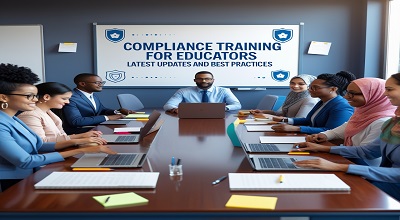
Compliance Training for Educators
Compliance training for educators is a critical component of professional development for educators. It ensures that teachers, administrators, and school staff adhere to legal, ethical, and institutional standards. With ever-changing regulations in education, staying updated on compliance requirements is essential to maintaining a safe and effective learning environment.
This comprehensive guide explores the latest trends, mandatory training topics, and best practices for compliance training in education. Whether you’re a teacher, school administrator, or education professional, this post will help you navigate compliance requirements effectively.
Why Compliance Training is Essential for Educators?
Legal and Ethical Responsibilities
Educational institutions must comply with federal, state, and local laws. Compliance training ensures that educators understand their legal obligations, such as:
- Title IX (preventing sex-based discrimination)
- FERPA (protecting student records)
- Mandatory Reporting Laws (child abuse and neglect)
Failure to comply can result in lawsuits, fines, and reputational damage.
Protecting Students and Staff
Compliance training helps create a safe and inclusive environment by addressing:
- Bullying and harassment prevention
- Emergency response protocols
- Mental health awareness
Avoiding Legal Penalties
Schools that neglect compliance training risk:
- Federal funding cuts
- Legal action from students or parents
- Loss of accreditation
Key Compliance Training Topics for Educators in 2024
Child Protection and Safeguarding
Educators must recognize signs of abuse and follow reporting procedures. Key laws include:
- Child Abuse Prevention and Treatment Act (CAPTA)
- State-specific mandatory reporting laws
Anti-Discrimination and Harassment Policies
Training should cover:
- Title VI (race, color, national origin discrimination)
- Title IX (gender discrimination)
- ADA (disability accommodations)
Data Privacy and Cybersecurity
With increasing digital learning, educators must protect student data under:
- FERPA (Family Educational Rights and Privacy Act)
- COPPA (Children’s Online Privacy Protection Act)
Special Education Laws
Key regulations include:
- Individuals with Disabilities Education Act (IDEA)
- Section 504 of the Rehabilitation Act
Health and Safety Regulations
Post-COVID-19 updates include:
- OSHA workplace safety
- Pandemic response protocols
Latest Trends in Compliance Training for Educators
Microlearning and Bite-Sized Modules
Short, focused training sessions improve retention and engagement.
Gamification and Interactive Training
Quizzes, simulations, and rewards make compliance training more engaging.
AI-Powered Compliance Tracking
AI tools help track completion rates and identify knowledge gaps.
Remote and Hybrid Training Solutions
Online platforms allow flexible, self-paced learning.
Best Practices for Effective Compliance Training
✅ Regular Updates – Laws change; training should too.
✅ Engaging Content – Use videos, quizzes, and discussions.
✅ Scenario-Based Learning – Real-world examples improve understanding.
✅ Automated Tracking – Ensure all staff complete required training.
How to Implement Compliance Training in Your School or District?
- Assess Needs – Identify mandatory and optional training topics.
- Choose a Platform – LMS (Learning Management System) options like TeachEducator.com.
- Measure Effectiveness – Surveys, quizzes, and compliance audits.
FAQs About Compliance Training for Educators
Q: How often should compliance training be updated?
A: Annually, or whenever laws change.
Q: Can compliance training be done online?
A: Yes, many schools use e-learning platforms.
Q: Who needs compliance training?
A: All staff, including teachers, aides, and administrators.
Conclusion
Compliance training is not just a legal requirement—it’s a cornerstone of a safe, ethical, and effective educational environment. By staying updated on the latest regulations and using modern training methods, educators can protect their students, their institutions, and themselves.