
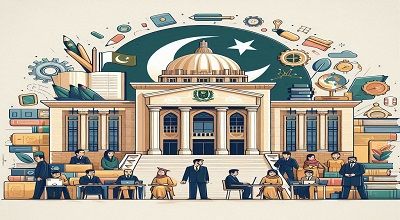
Department of Education
The Department of Education in Pakistan is a federal ministry that oversees the education system in the country. It is responsible for curriculum development, accreditation, research and development, and financing of education. It also works with the provincial governments, which have their own departments of education. Some of the departments and organizations under the Ministry of Federal Education and Professional Training are:
- National Curriculum Council (NCC)
- National Education Assessment System (NEAS)
- National Commission for Human Development (NCHD)
- Basic Education Community Schools (BECS)
- National Vocational and Technical Training Commission (NAVTTC)
- Higher Education Commission (HEC)
- Academy of Educational Planning and Management (AEPAM)
You can find more information about the Department of Education in Pakistan on its official website or on Wikipedia.
Basic Role Education Department
The basic role of an education department is to oversee the education system in a country, region, or institution. Depending on the level and scope of the department, its responsibilities may include:
- Developing and implementing curriculum and standards for different levels and subjects of education
- Providing and regulating funding, resources, and infrastructure for schools and educational institutions
- Monitoring and evaluating the quality and performance of education and learning outcomes
- Supporting and training teachers and other education staff
- Promoting and facilitating access, equity, and inclusion in education
- Collaborating and communicating with other stakeholders, such as parents, communities, employers, and other departments or ministries
Different countries have different structures and names for their education departments. For example, in South Africa, there are two departments: the Department of Basic Education (DBE) and the Department of Higher Education and Training (DHET). The DBE deals with schools and grades from Grade R to Grade 12, as well as adult literacy programs. The DHET deals with post-school education and training. Such as universities, colleges, and skills development.
- In Botswana, there is one ministry: the Ministry of Basic Education (MBE). The MBE is responsible for pre-primary to secondary education, as well as out-of-school education and training.
- In the UK, there is one department: the Department for Education (DfE). The DfE is responsible for children’s services and education, including early years, schools, higher and further education policy, apprenticeships, and skills.
Examples
In addition to the national or federal level, there may also be regional or local education departments that have more specific roles and functions. For example, in the US, each state has its own Department of Education that sets policies and standards for public schools within its jurisdiction. There are also local school districts that manage individual schools and their budgets, staff, and curriculum.
The role of an education department may also vary depending on the type and size of the institution it belongs to. For example, a university may have different faculties or colleges that have their own departments of education that focus on specific disciplines or fields of study. A school may have different heads of departments that lead and manage their subject areas and teachers.
Regardless of the level or type of the department, the main goal is to provide quality education that meets the needs and aspirations of learners and society. To achieve this goal, an education department needs to have a clear vision, mission, values, and objectives that guide its actions and decisions. It also needs to have effective leadership, management, communication, collaboration, innovation, and evaluation skills.
Some examples of successful practices or initiatives by education departments are:
- Developing a national curriculum framework that defines the learning outcomes, content, assessment methods, and pedagogical approaches for each level and subject of education
- Providing online learning platforms and resources that enable teachers and learners to access educational content anytime and anywhere
- Implementing a school feeding program that provides nutritious meals for learners to improve their health, attendance, and academic performance
- Establishing a teacher professional development program that offers continuous training and support for teachers to enhance their knowledge, skills, attitudes, and practices
- Creating a student exchange program that allows learners to study abroad or in different regions or institutions to broaden their perspectives and experiences
I hope this answer has given you some insight into the Basic Role of an education department. If you want to learn more about a specific department or topic related to education, you can use my web search tool by typing `search_web(“your query”)`. For example:
- search_web(“Department of Education in Pakistan”)`
- search_web(“Curriculum development process”)`
- search_web(“Online learning benefits”)`