
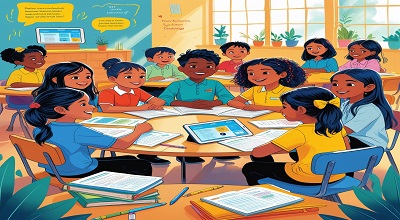
Empowering Bilingual Students
Empowering Bilingual Students: In today’s increasingly globalized world, classrooms are becoming more diverse, with students from various linguistic backgrounds. Bilingual education has emerged as a critical approach to ensuring equitable learning opportunities. However, language barriers still pose significant challenges.
Enter real-time translation technology—a game-changer in education. By breaking down language barriers instantly, this innovation empowers bilingual students, enhances engagement, and fosters inclusive learning environments.
In this comprehensive blog post, we explore how real-time translation is transforming bilingual education, its benefits, challenges, and what the future holds.
Understanding Bilingual Education
What is Bilingual Education?
Bilingual education refers to teaching academic content in two languages, helping students develop proficiency in both their native language and a second language (often English). This approach supports cognitive development, cultural awareness, and academic success.
Challenges Faced by Bilingual Students
- Language Barriers: Difficulty understanding lessons in a non-native language.
- Social Isolation: Struggles in communicating with peers and teachers.
- Academic Gaps: Falling behind due to comprehension delays.
Real-time translation can mitigate these challenges by providing instant linguistic support.
The Rise of Real-Time Translation Technology
What is Real-Time Translation?
Real-time translation uses AI-powered tools to convert spoken or written language instantly. Examples include Google Translate, Microsoft Translator, and specialized classroom apps.
How Does It Work?
- Speech Recognition: Captures spoken words.
- Machine Translation: Converts speech/text into the target language.
- Text-to-Speech/Screen Display: Delivers translated content in real-time.
Benefits of Real-Time Translation in Education
Enhancing Comprehension and Participation
- Students can follow lessons in their preferred language.
- Encourages active participation in discussions.
Bridging Communication Gaps
- Facilitates teacher-student and peer interactions.
- Reduces misunderstandings in assignments and instructions.
Supporting Teachers in Multilingual Classrooms
- Helps educators manage diverse classrooms efficiently.
- Reduces dependency on human interpreters.
Case Studies: Success Stories
Schools Implementing Real-Time Translation
- Example 1: A California school district reported a 30% increase in engagement among ESL students after adopting translation earbuds.
- Example 2: A university in Spain saw improved international student retention with AI-powered lecture translations.
Student and Teacher Feedback
- Students: Feel more confident and included.
- Teachers: Save time and improve lesson delivery.
Potential Challenges and Solutions
Accuracy and Contextual Understanding
- Challenge: Slang and idioms may be mistranslated.
- Solution: Continuous AI training with educational content.
Accessibility and Cost
- Challenge: High-tech tools may be expensive.
- Solution: Government and institutional funding for ed-tech.
Future of Real-Time Translation in Education
AI and Machine Learning Advancements
- More accurate, context-aware translations.
- Voice recognition for regional dialects.
Integration with EdTech Tools
- Seamless compatibility with LMS (Learning Management Systems).
- Virtual classrooms with auto-translated captions.
Conclusion
Real-time translation is revolutionizing bilingual education by fostering inclusivity, improving comprehension, and empowering students. While challenges like accuracy and cost remain, advancements in AI promise an even brighter future.