
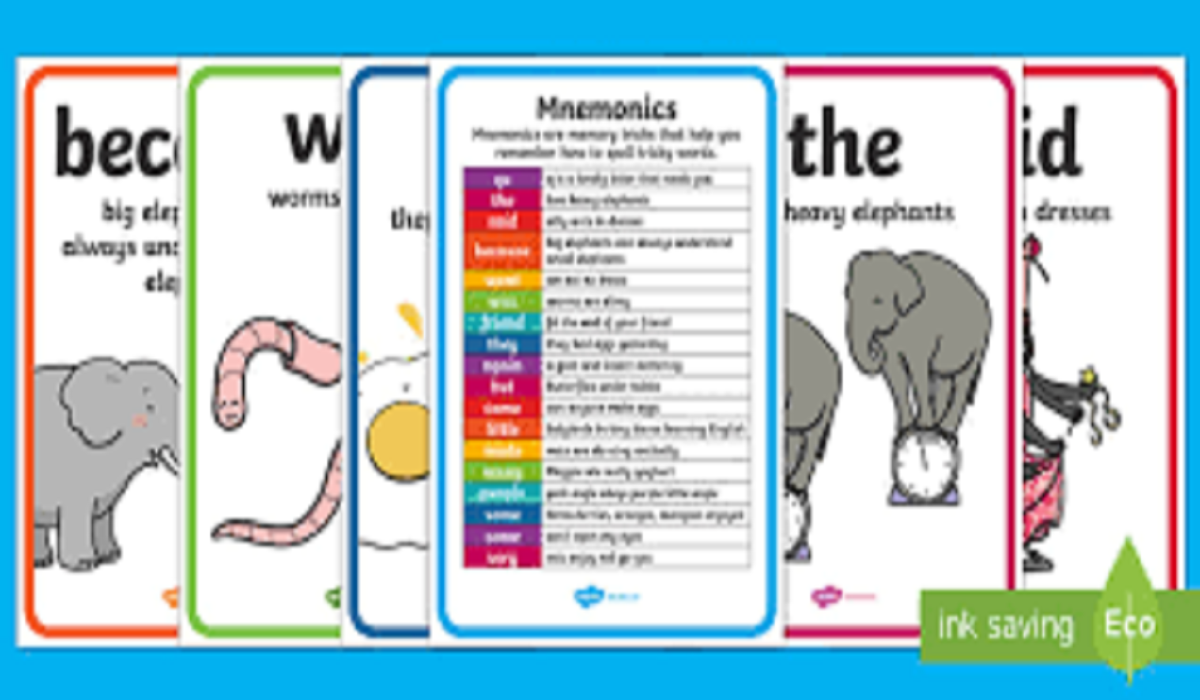
Mnemonics & Memory Hacks
Mnemonics & Memory Hacks: In today’s fast-paced world, the ability to retain and recall information quickly is invaluable. Students, professionals, and lifelong learners constantly seek ways to enhance their memory. Among the most popular techniques are mnemonics and memory hacks. But do they really work? This comprehensive guide explores the science behind mnemonics, different memory techniques, their effectiveness, and how you can apply them to boost learning.
What Are Mnemonics?
Mnemonics are memory aids that help encode complex information into an easier-to-remember format. These techniques rely on association, visualization, and pattern recognition to improve recall.
Historically, mnemonics date back to ancient Greek and Roman scholars who used them to memorize speeches and texts. Today, they are widely used in education, medicine, language learning, and professional training.
Types of Mnemonics & Memory Techniques
Acronyms & Acrostics
- Acronyms: Shortening a phrase into initials (e.g., “ROYGBIV” for rainbow colors).
- Acrostics: Creating a sentence where the first letters represent the information (e.g., “My Very Educated Mother Just Served Us Noodles” for planet order).
The Method of Loci (Memory Palace)
A powerful ancient technique where you associate information with familiar locations, enhancing spatial memory.
Chunking
Breaking large information into smaller, manageable groups (e.g., phone numbers: 123-456-7890).
Rhymes & Songs
Turning facts into rhymes or songs (e.g., “Thirty days hath September…”).
Visualization & Association
Linking abstract concepts with vivid mental images (e.g., imagining a giant “hippopotamus” to remember “hippocampus”).
The Science Behind Memory Hacks
Memory formation involves three stages:
- Encoding (processing information)
- Storage (retaining information)
- Retrieval (recalling information)
Mnemonics optimize encoding by making information more meaningful. Studies in cognitive psychology confirm that elaborative encoding (connecting new info to existing knowledge) enhances retention.
Cognitive Load Theory
The brain has limited working memory capacity. Mnemonics reduce cognitive overload by organizing data efficiently.
Spaced Repetition & Active Recall
Combining mnemonics with spaced repetition (reviewing info at increasing intervals) maximizes long-term retention.
Do Mnemonics Really Work?
Research & Studies
- A 2017 study in Memory & Cognition found that medical students using mnemonics retained 20-30% more information.
- The “Memory Palace” technique has been shown to improve recall by up to 3x in competitive memorizers.
Pros & Cons
✅ Pros:
- Faster memorization
- Useful for lists, formulas, languages
- Fun & engaging
❌ Cons:
- Time-consuming to create
- May not aid deep understanding
- Not ideal for all types of information
How to Use Mnemonics Effectively?
- Start simple (use acronyms before advanced techniques).
- Make it personal (weird, funny, or emotional associations stick better).
- Combine with active recall (test yourself regularly).
- Use in moderation (over-reliance can hinder critical thinking).
Alternative Memory Improvement Strategies
- Sleep & Nutrition: Poor sleep impairs memory.
- Exercise: Boosts brain function.
- Mindfulness: Reduces stress, improving focus.
- Apps like Anki & Quizlet: Digital spaced repetition tools.
FAQs About Mnemonics & Memory Hacks
1. Are mnemonics only for short-term memory?
No, when combined with spaced repetition, they enhance long-term retention.
2. Can anyone learn memory techniques?
Yes, with practice, most people can improve recall using mnemonics.
3. Do memory champions use these techniques?
Yes, top memorizers rely heavily on the Method of Loci and visualization.
4. Are mnemonics useful for complex subjects like math?
Yes, for formulas and sequences, but understanding concepts is still crucial.
5. How long does it take to see results?
Some techniques work immediately; others (like Memory Palace) require weeks of practice.
Conclusion
Mnemonics and memory hacks do work, but their effectiveness depends on proper application. They are not magic tricks—consistent practice and combining them with other learning strategies yield the best results.