
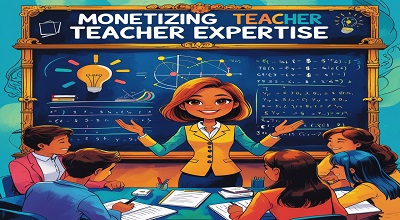
Monetizing Teacher Expertise
Monetizing Teacher Expertise: The teaching profession is one of the most impactful yet often underpaid careers. However, with the rise of digital platforms, teachers now have unprecedented opportunities to monetize their expertise beyond the traditional classroom. Whether through online courses, e-books, coaching, or content creation, educators can leverage their skills to generate additional income while making a broader impact.
This comprehensive guide explores the latest strategies, real-world examples, and actionable steps for teachers to turn their knowledge into profitable ventures.
Why Monetize Teacher Expertise?
Teachers possess specialized knowledge, pedagogical skills, and experience that are highly valuable. Monetizing this expertise offers several benefits:
- Supplemental Income: Many educators face financial constraints, and side hustles can provide financial stability.
- Flexibility: Digital monetization allows teachers to work on their own schedules.
- Broader Impact: Sharing knowledge online reaches a global audience.
- Professional Growth: Developing courses or content enhances teaching skills and personal branding.
Ways to Monetize Teacher Expertise?
Online Courses and Webinars
Platforms like Udemy, Teachable, and Coursera allow teachers to create and sell courses. Example: A math teacher offering an advanced algebra course.
E-books and Educational Guides
Self-publishing via Amazon Kindle Direct Publishing (KDP) or Gumroad. Example: A science teacher writing a guide on STEM experiments.
Coaching and Consulting
One-on-one tutoring, career coaching, or curriculum development consulting. Example: A veteran teacher offering new teacher mentorship.
Membership Sites and Subscription Models
Platforms like Patreon or Kajabi for exclusive content. Example: A language teacher offering monthly grammar lessons.
Affiliate Marketing and Sponsored Content
Promoting educational tools (e.g., Kahoot!, Canva) and earning commissions.
Selling Lesson Plans and Teaching Resources
Websites like Teachers Pay Teachers (TPT) allow educators to sell materials.
Public Speaking and Workshops
Conducting paid seminars at schools or educational conferences.
YouTube and Educational Content Creation
Monetizing through ads, sponsorships, and memberships.
Podcasting for Educators
Starting an education-focused podcast with sponsors.
Licensing Curriculum and Intellectual Property
Selling custom curricula to schools or edtech companies.
Real-Life Examples of Teachers Monetizing Their Expertise
- Example 1: A history teacher creates a popular YouTube channel explaining complex events.
- Example 2: An English teacher sells grammar workbooks on Amazon.
- Example 3: A coding instructor earns passive income through a Udemy course.
Challenges and How to Overcome Them
- Time Management: Balancing teaching and side projects requires scheduling.
- Marketing Skills: Learning basic digital marketing helps in promotion.
- Competition: Niche specialization helps stand out.
Tools and Platforms to Help Teachers Monetize
- Course Creation: Teachable, Thinkific
- E-books: Amazon KDP, Gumroad
- Membership Sites: Patreon, Podia
- Resource Selling: Teachers Pay Teachers, Etsy
Future Trends in Monetizing Teacher Expertise
- AI-Powered Teaching Tools
- Micro-Credentialing & Badges
- Virtual Reality (VR) Classrooms
Conclusion
Monetizing teacher expertise is not just about earning extra income—it’s about expanding influence and embracing new opportunities in the digital age. By leveraging the right strategies, educators can turn their passion into profit while continuing to inspire learners worldwide.
FAQs
1. How much can teachers earn by monetizing their expertise?
Earnings vary widely—some make a few hundred dollars monthly, while top creators earn six figures.
2. Do I need technical skills to start?
Basic digital literacy is enough; many platforms are user-friendly.
3. Is it legal to sell lesson plans I created for my school?
Check your employment contract; some schools retain rights to materials created during work hours.
4. How do I market my educational products?
Use social media, SEO, and email marketing to reach your audience.
5. Can I monetize as a part-time teacher?
Absolutely! Many successful teacher-entrepreneurs start part-time.
Free Download: Svip5 APK