
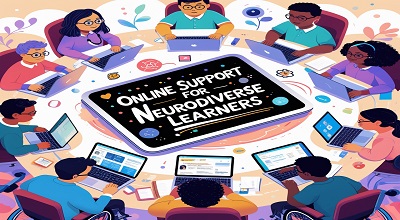
Online Support for Neurodiverse Learners
Online Support for Neurodiverse Learners: Neurodiversity refers to the natural variations in human brain function and behavioral traits, including conditions such as autism, ADHD, dyslexia, and others. With the rise of digital learning, online support for neurodiverse learners has become increasingly essential. This article explores the latest strategies, tools, and examples of effective online support for neurodiverse students.
Understanding Neurodiversity
Neurodiversity encompasses a range of neurological differences, including:
- Autism Spectrum Disorder (ASD)
- Attention Deficit Hyperactivity Disorder (ADHD)
- Dyslexia
- Dyspraxia
- Dyscalculia
These differences affect learning styles, communication, and social interactions. Recognizing neurodiversity helps educators tailor support to individual needs.
Challenges Faced by Neurodiverse Learners
Neurodiverse learners often encounter difficulties such as:
- Sensory Overload (bright screens, background noise)
- Executive Function Challenges (organization, time management)
- Social Interaction Barriers (difficulty in group discussions)
- Reading and Writing Difficulties (dyslexia-related challenges)
Traditional classrooms may not always accommodate these needs, making online support crucial.
Benefits of Online Support for Neurodiverse Learners
Online learning offers several advantages:
✅ Flexible Learning Paces – Self-paced modules help students learn at their own speed.
✅ Customizable Interfaces – Adjustable fonts, colors, and audio support reduce sensory overload.
✅ Assistive Technology Integration – Text-to-speech, speech-to-text, and mind-mapping tools aid learning.
✅ Reduced Social Anxiety – Asynchronous discussions allow participation without pressure.
Key Strategies for Online Support
A. Personalized Learning Plans
- Use AI-driven platforms to adapt content based on learner needs.
- Example: Century Tech adjusts lessons in real-time.
B. Multisensory Learning Tools
- Incorporate videos, interactive quizzes, and audio notes.
- Example: Khan Academy offers visual and auditory explanations.
C. Structured and Predictable Layouts
- Clear navigation and consistent formats reduce cognitive load.
- Example: Google Classroom provides organized assignment structures.
D. Social-Emotional Learning (SEL) Integration
- Platforms like Peppy Pals teach emotional regulation through gamification.
E. Teacher and Parent Collaboration
- Tools like Seesaw enable real-time feedback between educators and families.
Examples of Online Tools and Platforms
| Tool | Purpose | Example Use Case |
|---|---|---|
| Read&Write | Text-to-speech, word prediction | Helps dyslexic students with reading assignments |
| BrainPOP | Animated educational videos | Engages ADHD learners with short, interactive lessons |
| Bookshare | Accessible eBooks | Supports students with print disabilities |
| ModMath | Digital math worksheets | Assists dyscalculic learners with problem-solving |
| Otsimo | Special education games | Helps autistic children with communication skills |
Case Studies of Successful Online Support
Case Study 1: Autism and Virtual Learning
A school district implemented Microsoft Immersive Reader for autistic students, resulting in a 30% improvement in reading comprehension.
Case Study 2: Dyslexia-Friendly E-Learning
A university adopted Speechify for text-to-speech support, leading to higher retention rates among dyslexic students.
Future Trends in Online Support for Neurodiverse Learners
- AI-Powered Personalization – Adaptive learning systems will refine support in real time.
- VR and AR for Sensory Learning – Virtual reality can create controlled, immersive environments.
- Blockchain for Secure IEPs – Decentralized Individualized Education Plans (IEPs) ensure privacy and accessibility.
Conclusion
Online support for neurodiverse learners is transforming education by providing inclusive, adaptable, and engaging learning experiences. With the right tools and strategies, educators can empower every student to succeed.
FAQs
Q1: What is neurodiversity?
Neurodiversity refers to the natural variations in brain function, including conditions like autism, ADHD, and dyslexia.
Q2: How can online learning help neurodiverse students?
It offers customizable, flexible, and multisensory learning experiences that cater to individual needs.
Q3: What are some free tools for neurodiverse learners?
- Google Read & Write (text-to-speech)
- Khan Academy (visual learning)
- LibreTexts (accessible textbooks)
Q4: How can teachers support neurodiverse students online?
By using structured layouts, assistive tech, and personalized learning plans.
Q5: What future technologies will aid neurodiverse learners?
AI-driven adaptive learning, VR for sensory regulation, and blockchain for secure IEPs.
Free Here: Sansar24 APK