
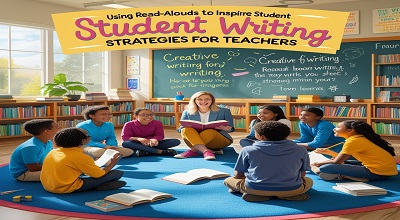
Read-Alouds to Inspire Student Writing
Read-Alouds to Inspire Student Writing: In today’s dynamic educational landscape, fostering strong writing skills in students remains a critical challenge. One powerful yet often underutilized strategy is the integration of read-alouds to inspire student writing. By exposing students to rich language, diverse narratives, and engaging storytelling, teachers can unlock creativity, improve vocabulary, and strengthen writing proficiency.
This comprehensive guide explores the latest research-backed methods for using read-alouds to enhance student writing. From selecting the right texts to designing interactive writing prompts, we’ll provide actionable strategies for educators at all levels.
The Power of Read-Alouds in Writing Instruction
Read-alouds are not just for early learners—they benefit students of all ages. When teachers read aloud, they model fluency, expression, and comprehension, which indirectly improves students’ writing abilities.
Why Read-Alouds Work for Writing
- Exposure to rich vocabulary – Students hear advanced words in context.
- Understanding narrative structure – They learn about plot, character development, and pacing.
- Inspiration from diverse voices – Different genres and authors broaden creative thinking.
How Read-Alouds Enhance Writing Skills?
Research shows that students who engage in regular read-aloud sessions demonstrate:
✔ Stronger sentence structure
✔ Improved grammar and syntax
✔ Greater creativity in storytelling
Key Benefits:
- Expands Imagination – Hearing stories sparks new ideas.
- Builds Confidence – Students mimic styles before developing their own.
- Encourages Critical Thinking – Analyzing texts leads to better-written responses.
Selecting the Best Books for Read-Aloud Writing Inspiration
Not all books are equally effective for inspiring writing. Consider:
Criteria for Choosing Read-Aloud Books:
✅ Engaging Plot – Captures students’ attention.
✅ Rich Language – Introduces new vocabulary.
✅ Relatable Themes – Encourages personal connections.
Recommended Books for Different Grade Levels:
- Elementary: The Day the Crayons Quit (Drew Daywalt)
- Middle School: Wonder (R.J. Palacio)
- High School: The Hate U Give (Angie Thomas)
Strategies for Effective Read-Aloud Sessions
Maximize impact with these techniques:
Before Reading:
- Set a purpose – “Listen for descriptive words.”
- Preview vocabulary – Define challenging terms.
During Reading:
- Use expressive tone – Model pacing and emotion.
- Pause for predictions – “What do you think happens next?”
After Reading:
- Discuss themes – Connect to students’ experiences.
- Prompt writing reflections – “How would you change the ending?”
Connecting Read-Alouds to Writing Activities
Transform listening into writing with these exercises:
Writing Prompts Based on Read-Alouds:
- Narrative Writing – Rewrite a scene from a different character’s perspective.
- Descriptive Writing – Imagine a new setting for the story.
- Persuasive Writing – Defend a character’s actions.
Example Activity:
After reading Charlotte’s Web, students write a diary entry from Wilbur’s perspective.
Assessing Student Writing Inspired by Read-Alouds
Evaluate progress with rubrics focusing on:
- Creativity & Originality
- Use of Vocabulary from the Text
- Structural Coherence
Common Challenges and Solutions
Problem: Students lose interest.
Solution: Use interactive read-alouds with voices and gestures.
Problem: Limited time for read-alouds.
Solution: Integrate short, high-impact passages.
Technology-Enhanced Read-Alouds for Modern Classrooms
Leverage tools like:
- Audible & Epic! – Digital libraries with read-aloud features.
- Flipgrid – Students record their own read-aloud responses.
Success Stories: Teachers Share Their Experiences
*“After implementing weekly read-alouds, my students’ writing improved by 40% in creativity scores!”* – Ms. Rodriguez, 5th Grade Teacher
Conclusion & Next Steps
Read-alouds are a simple yet transformative tool for inspiring student writing. Start by selecting engaging books, incorporating interactive discussions, and linking sessions to writing tasks.