
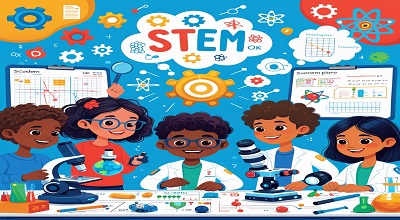
STEM Education for Kids
STEM Education for Kids: STEM stands for Science, Technology, Engineering, and Mathematics. It is an interdisciplinary approach to learning that integrates these four disciplines into a cohesive curriculum. STEM education emphasizes hands-on, problem-based learning to prepare students for future careers in a technology-driven world.
For kids, STEM education fosters critical thinking, creativity, collaboration, and problem-solving skills. Instead of memorizing facts, children engage in experiments, projects, and real-world applications.
Why STEM Education is Important for Kids?
STEM education is crucial for several reasons:
- Prepares for Future Jobs: Over 75% of future jobs will require STEM skills (World Economic Forum).
- Encourages Innovation: Kids learn to think outside the box and develop new solutions.
- Improves Problem-Solving Skills: Hands-on projects teach logical reasoning.
- Boosts Digital Literacy: Children become familiar with coding, robotics, and AI early on.
- Promotes Gender Equality: Encourages girls to pursue STEM fields, reducing the gender gap.
Key Components of STEM Learning
A strong STEM program includes:
A. Science
B. Technology
- Experiments (e.g., growing plants, chemical reactions)
- Nature exploration (e.g., weather patterns, ecosystems)
- Coding for kids (Scratch, Python)
- Robotics (LEGO Mindstorms, Sphero)
C. Engineering
- Building structures (bridges, towers with popsicle sticks)
- Designing simple machines (pulleys, levers)
D. Mathematics
- Real-world math applications (budgeting, geometry in construction)
- Puzzles and logic games (Sudoku, Tangrams)
Latest Trends in STEM Education
The field of STEM is evolving rapidly. Some latest trends include:
- AI and Machine Learning for Kids (e.g., Teachable Machine by Google)
- Virtual Reality (VR) in Classrooms (Google Expeditions)
- Gamified Learning (Minecraft Education Edition)
- 3D Printing in Schools (Creating prototypes)
- Sustainability and Green STEM (Solar energy projects)
Practical STEM Activities for Kids
Here are engaging STEM activities for different age groups:
A. For Ages 5-8
- Rainbow Milk Experiment (Science: Surface tension with food coloring & soap)
- LEGO Simple Machines (Engineering: Building levers and gears)
B. For Ages 9-12
- DIY Volcano Eruption (Science: Baking soda & vinegar reaction)
- Scratch Coding Game (Technology: Creating animations)
C. For Teens
- Build a Solar-Powered Car (Engineering & Sustainability)
- Python Programming Basics (Technology: Writing simple code)
STEM Tools and Resources for Educators
Teachers can use these tools to enhance STEM learning:
| Tool | Purpose |
|---|---|
| Scratch | Teaches block-based coding |
| Tinkercad | 3D design and printing |
| Ozobot | Introduces robotics |
| Khan Academy | Free STEM courses |
| NASA STEM Engagement | Space-related projects |
Challenges in STEM Education and Solutions
Challenges:
- Lack of funding for STEM programs
- Shortage of qualified teachers
- Gender and racial disparities
Solutions:
- Government and private grants for schools
- Teacher training programs
- Encouraging diversity through mentorship
Future of STEM Education
The future of STEM includes:
- Personalized AI Tutors
- More AR/VR Learning
- Global STEM Collaborations
- Focus on Climate Science
Conclusion
STEM education equips kids with essential skills for the future. By integrating hands-on learning, technology, and real-world applications, we can inspire the next generation of innovators.
Free Download: Devil May Cry
FAQs
Q1: What is the best age to start STEM education?
A: Kids can start as early as 3-5 years old with simple experiments and building blocks.
Q2: How can I teach STEM at home?
A: Use everyday materials (e.g., baking soda, LEGO) or online platforms like Scratch and Khan Academy.
Q3: Are there free STEM resources for schools?
A: Yes! NASA STEM, Code.org, and PhET Simulations offer free lessons.
Q4: How does STEM benefit girls?
A: It breaks stereotypes and encourages girls to pursue careers in science and tech.
Q5: What careers can STEM lead to?
A: Robotics engineer, data scientist, environmental scientist, software developer, and more.