
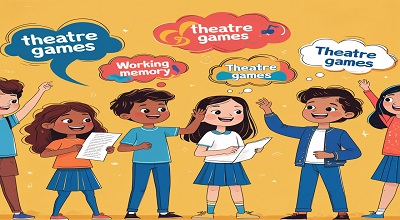
Theatre Games Boost Working Memory Skills in Students
Theatre Games Boost Working Memory Skills in Students: In today’s fast-paced educational environment, students face increasing demands on their cognitive abilities, particularly their working memory. Working memory—the brain’s ability to hold and manipulate information in the short term—is crucial for learning, problem-solving, and academic success.
Recent studies suggest that theatre games, often associated with drama classes, can significantly enhance working memory in students. These engaging, interactive activities not only make learning fun but also strengthen cognitive skills in ways traditional methods may not.
In this comprehensive guide, we’ll explore:
- The science behind working memory and its role in learning
- How theatre games improve cognitive function
- Practical theatre games to implement in the classroom
- Real-world success stories and research findings
- Tips for educators to maximize the benefits
By the end, you’ll have a toolkit of strategies to help students boost their working memory while fostering creativity and collaboration.
Understanding Working Memory
What Is Working Memory?
Working memory is the cognitive system responsible for temporarily storing and processing information. It allows students to:
- Follow multi-step instructions
- Solve math problems in their heads
- Comprehend reading passages
- Retain information during discussions
Unlike long-term memory, which stores knowledge indefinitely, working memory is limited and requires active engagement.
Why Is It Important for Learning?
Research shows that strong working memory correlates with academic success. Students with better working memory:
- Excel in reading and math
- Demonstrate stronger problem-solving skills
- Adapt more easily to new tasks
Conversely, weak working memory can lead to:
- Difficulty following directions
- Struggles with complex tasks
- Lower academic performance
Signs of Weak Working Memory in Students
Educators should watch for:
- Frequently losing track of instructions
- Forgetting steps in a task
- Struggling with mental math
- Difficulty organizing thoughts in writing
The Connection Between Theatre and Cognitive Development
Theatre games engage multiple brain functions, making them ideal for working memory development.
How Drama Enhances Brain Function?
- Active Engagement: Unlike passive learning, theatre requires real-time participation.
- Multisensory Learning: Combines movement, speech, and imagination.
- Emotional Connection: Emotions strengthen memory retention.
The Role of Movement, Imagination, and Social Interaction
- Movement: Kinesthetic learning boosts neural connections.
- Imagination: Creative thinking enhances memory flexibility.
- Social Interaction: Collaborative play reinforces recall and attention.
Top Theatre Games to Strengthen Working Memory
Game 1: Zip Zap Zop – Focus & Quick Recall
How to Play:
- Students stand in a circle.
- One says “Zip” and points to another, who says “Zap” and passes to the next, then “Zop.”
- Speed increases to challenge recall.
Cognitive Benefits:
- Sharpens focus
- Improves reaction time
- Strengthens auditory memory
Game 2: Mirror Exercises – Enhancing Visual Memory
How to Play:
- Students pair up, with one leading movements and the other mirroring.
- Roles switch to engage both sides of the brain.
Cognitive Benefits:
- Boosts visual-spatial memory
- Enhances coordination
FAQs About Theatre Games and Working Memory
1. Can theatre games help students with ADHD?
Yes! The dynamic nature of theatre games improves focus and impulse control, making them ideal for ADHD students.
2. How often should teachers use theatre games?
Ideally, 2-3 times per week for noticeable cognitive benefits.
3. Do theatre games work for high school students?
Absolutely—games can be adapted for complexity to suit older students.
4. Can these games be used in online learning?
Yes, with modifications like virtual role-playing and digital storytelling.
5. How long before improvements in working memory are seen?
Studies suggest 4-8 weeks of consistent practice leads to measurable gains.
Conclusion
Theatre games offer a powerful, engaging, and scientifically backed method to strengthen students’ working memory. By incorporating these activities into the classroom, educators can enhance cognitive skills while making learning more dynamic and enjoyable.