
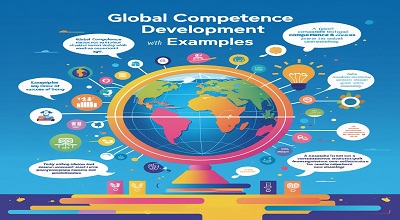
Global Competence Development
Global Competence Development: In today’s interconnected world, global competence has become a crucial skill for students, educators, and professionals. It refers to the ability to understand and act on issues of global significance while respecting diverse cultures and perspectives. This blog post explores the latest trends, strategies, and examples of global competence development, helping educators integrate these skills into their teaching practices.
What is Global Competence?
Global competence is the capacity to:
- Examine local, global, and intercultural issues.
- Understand and appreciate different perspectives.
- Engage in open, appropriate, and effective interactions across cultures.
- Take action for collective well-being and sustainable development.
The OECD’s PISA Global Competence Framework highlights four key dimensions:
- Knowledge of global issues
- Intercultural skills
- Analytical and critical thinking
- Ability to take action
Why is Global Competence Important?
1. Preparing Students for a Globalized Workforce
Employers seek individuals who can collaborate across cultures, solve complex problems, and adapt to diverse environments.
2. Promoting Cultural Understanding
Global competence fosters empathy, reduces biases, and encourages inclusive societies.
3. Addressing Global Challenges
Climate change, migration, and economic inequality require globally competent individuals to develop sustainable solutions.
How to Develop Global Competence? (With Examples)
1. Integrating Global Topics into Curriculum
- Example: A history teacher discusses the impact of colonialism from multiple cultural perspectives, including African, Asian, and European viewpoints.
- Example: A science class explores climate change by analyzing its effects on different countries and discussing mitigation strategies.
2. Encouraging Cross-Cultural Collaboration
- Example: Schools partner with international institutions for virtual exchange programs, where students work on joint projects.
- Example: A Model United Nations (MUN) simulation helps students debate global issues from different national perspectives.
3. Using Technology for Global Learning
- Example: Platforms like ePals or PenPal Schools connect students worldwide for collaborative learning.
- Example: Teachers use Google Earth to explore different cultures, economies, and geographies interactively.
4. Developing Critical Thinking & Media Literacy
- Example: Students analyze fake news about global events and learn to identify credible sources.
- Example: A debate on ethical consumerism encourages students to research multinational corporations’ labor practices.
5. Encouraging Service Learning & Social Action
- Example: Students organize a fundraiser for refugees, researching their challenges and advocating for policy changes.
- Example: A school adopts a sister-school program in a developing country, exchanging resources and knowledge.
Latest Trends in Global Competence Development
- AI and Virtual Reality (VR) in Global Education
- AI-powered language learning apps (e.g., Duolingo) enhance multilingual skills.
- VR field trips allow students to “visit” global landmarks and communities.
- Emphasis on Social-Emotional Learning (SEL)
- Schools incorporate mindfulness and empathy training to enhance intercultural sensitivity.
- Sustainable Development Goals (SDGs) in Education
- Many schools align projects with UN SDGs, such as reducing inequality or promoting clean energy.
- Global Competency Certifications
- Programs like IB (International Baccalaureate) and Global Citizen Diploma recognize students’ global skills.
Challenges in Global Competence Development
- Lack of Teacher Training – Many educators need professional development in global education strategies.
- Resource Limitations – Schools in low-income areas may struggle with funding for international programs.
- Cultural Resistance – Some communities may resist global perspectives due to political or ideological reasons.
Conclusion
Global competence is no longer optional—it’s essential for thriving in a connected world. By integrating global topics, cross-cultural collaboration, technology, and real-world action, educators can prepare students to become informed, empathetic, and proactive global citizens.