
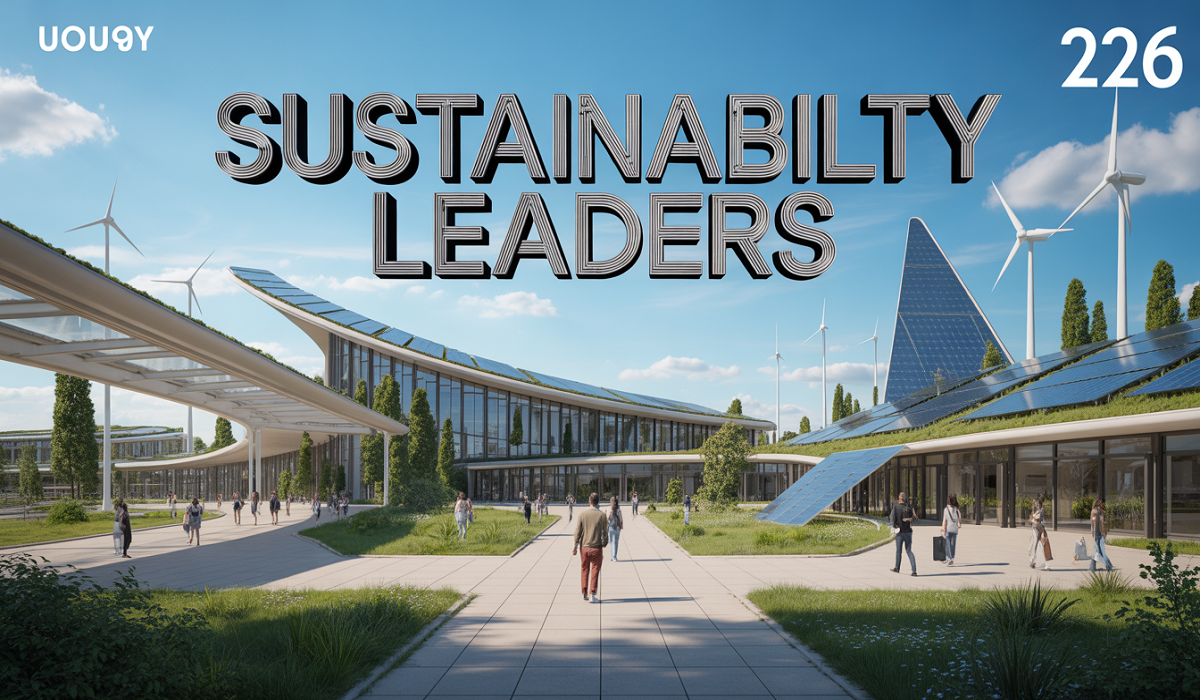
Net Zero Education Campuses 2026
Net Zero Education Campuses 2026: Close your eyes and picture a normal school. Fluorescent lights buzzing. Old windows letting heat escape. Plastic trays in the cafeteria. Buses puffing diesel smoke. Now imagine the opposite: solar panels on every roof, rain catching systems, walls made of recycled materials, and a lunchroom that gives back to the soil. That future is called net zero education campuses 2026, and it’s not science fiction. It’s a plan that schools around the world are racing to build.
By the year 2026, hundreds of K–12 schools, colleges, and universities want to reach “net zero.” That means they produce as much clean energy as they use, send zero waste to landfills, and create healthy indoor air for learning. But here’s the exciting part – these campuses don’t just save the planet. They totally change how students learn. Math becomes real when you measure solar output. Biology happens in the school garden. Social studies explores climate justice.
In this article, we’ll walk through what net zero campuses look like, why 2026 is the big target year, and how this shift will make education better for every student – from kindergarten to college.
What Exactly Is a Net Zero Campus?
Let’s break down the term “net zero.” It doesn’t mean a school uses zero energy. It means the total amount of energy used by the campus over a year equals the amount of renewable energy created on site (or nearby). Think of it like a bank account. You take out energy (lights, computers, heat). You deposit clean energy (sun, wind, even compost). At the end of the year, your balance is zero. That’s net zero.
But net zero education campuses 2026 go further than energy. They also aim for:
- Zero waste: No trash going to landfills. Everything is reused, recycled, or composted.
- Net zero water: Rain and greywater are captured and cleaned for toilets, gardens, and cooling.
- Carbon neutral: Any emissions from buses or food transport are balanced by planting trees or buying carbon credits.
- Healthy materials: No toxic paints, carpets, or cleaners. Classrooms have fresh air and natural light.
These campuses look like living ecosystems, not factories. You’ll see green roofs, walls of plants, outdoor classrooms, and even small farms.
Why 2026? The Race to Reach Net Zero
You might wonder: why are so many schools aiming for 2026? There are three big reasons.
1. Government Goals and Climate Deadlines
Many countries have promised to cut carbon emissions in half by 2030. Schools want to get ahead of that curve. The year 2026 gives them five years from the big 2021 climate conferences to plan, fund, and build. It’s an ambitious but realistic timeline. For example, California and New York have laws pushing all new public buildings – including schools – to be net zero by 2026 or earlier.
2. Cost Savings from Green Tech
Solar panels and batteries are cheaper than ever. In 2010, a solar system cost about $2.50 per watt. By 2025, it’s around $0.25 per watt. LED lights use 75% less energy than old bulbs. Smart thermostats cut heating bills by 20%. Schools realize that building green saves millions over 20 years. The savings can pay for teachers, books, and field trips.
3. Student Demand for Action
Today’s students grew up with climate strikes, wildfires, and floods. They don’t want to learn about sustainability in a leaky, wasteful building. They want to live it. Surveys show 78% of teenagers prefer schools that are environmentally responsible. Many are demanding net zero campuses from their school boards.
7 Key Features of Net Zero Education Campuses 2026
Let’s take a tour inside a net zero education campuses 2026 model. These features are already being built in pilot schools from Europe to Asia to North America.
1. Solar Power Everywhere
Rooftops, parking canopies, even windows – all covered with solar panels. Some campuses add small wind turbines if they’re in windy areas. Excess energy charges batteries or sells back to the grid on sunny days. Students track real-time energy use on dashboards in their classrooms.
2. Super Insulated Buildings
Unlike old schools with drafty windows, net zero campuses have thick walls, triple-pane glass, and airtight doors. Some use “passive house” design, where the building holds heat from the sun and bodies so well that traditional furnaces aren’t needed.
3. Natural Light and Fresh Air
Classrooms face south to get sunlight. Big windows mean lights stay off most of the day. Sensors dim LEDs when enough sun is present. CO2 monitors tell teachers when to open windows. No more stuffy, dark rooms that make kids sleepy.
4. On-Site Food and Composting
Many net zero campuses grow vegetables in hydroponic towers or outdoor beds. Cafeterias use reusable plates and compost all scraps. Leftovers feed worms or become fertilizer for the garden. Some schools have small orchards and chicken coops. Food miles drop to zero.
5. Rainwater Harvesting and Water Recycling
Rain falls on the roof, flows into barrels or cisterns, then gets filtered for toilets, handwashing, and garden watering. Some campuses treat greywater from sinks and showers so it can safely water plants. This cuts city water use by up to 70%.
6. Green Transportation
The school bus runs on electricity or biodiesel. Bike racks overflow with student bicycles. Parking spots for electric cars have chargers. Some campuses even have a “walking school bus” – a supervised walking route from a nearby neighborhood.
7. Living Labs for Learning
This is the game-changer. The campus itself becomes a teaching tool. Solar panels teach physics. Compost teaches biology. Rain barrels teach hydrology. Energy dashboards teach math and data science. Students aren’t just learning about sustainability – they’re doing it every day.
How Learning Changes on a Net Zero Campus?
Most people think green campuses are just about saving energy. But teachers and students say the biggest change is how they learn. Let’s compare a normal school day to a day on a net zero education campuses 2026.
Normal school:
Math class does problems from a textbook. Science class reads about photosynthesis. Lunch is pre-packaged. Social studies talks about the Industrial Revolution.
Net zero campus:
Math class calculates how many solar panels needed to power the gym. Science class actually measures photosynthesis in the greenhouse. Lunch is grown on campus. Social studies designs a climate action plan for the town. Every subject connects to the real world.
This is called “place-based learning.” The campus becomes the textbook. Studies show students in green schools score 10–15% higher on science and math tests. They also have fewer sick days because of better air quality.
Real Example: The Green School in Bali
The Green School in Bali, Indonesia, isn’t net zero yet, but it’s close. It’s built from bamboo, runs on solar and hydro power, and has no walls between classes. Students grow rice, build electric vehicles, and measure river health. Graduates go on to top universities with a deep understanding of how the world works. Schools like this prove that net zero education campuses 2026 are possible – even in remote areas.
Challenges Schools Face (And How They Solve Them)
Of course, building net zero campuses isn’t easy. Here are the biggest hurdles and the clever solutions schools are using.
Challenge 1: Upfront Cost
Building a net zero school can cost 10–20% more than a regular school. That might mean $2 million extra for a $10 million project. Many districts don’t have that cash.
Solution:
Green bonds, government grants, and energy savings contracts. In an energy savings contract, a private company pays for the green upgrades upfront. The school pays them back over time from the money saved on utility bills. By year 10, the school saves millions.
Challenge 2: Old Buildings
Retrofitting an existing school to net zero can be harder than building new. Old wiring, asbestos, and brick walls cause problems.
Solution:
Phased renovations. First, add solar panels and LED lights. Next, replace windows and insulation. Then upgrade HVAC systems. Some schools become “net zero ready” in stages over five years.
Challenge 3: Training Teachers
Teachers didn’t learn about net zero campuses in college. They may not know how to use the building as a teaching tool.
Solution:
Professional development workshops and simple curriculum guides. For example, a “energy detective” lesson where students find vampire power (electronics that use energy while off). Many districts hire a sustainability coordinator to help teachers.
Challenge 4: Behavior Change
Students and staff must turn off lights, close windows when heat is on, and sort compost. Old habits die hard.
Solution:
Gamification. Schools create energy-saving competitions between classrooms. Leaderboards show real-time data. Winning classes get pizza parties or extra recess. Positive peer pressure works.
The Role of Technology in Net Zero Campuses
Technology makes net zero education campuses 2026 smarter, not just greener. Here’s what’s inside the control room.
Smart Building Management Systems (BMS)
A BMS is like a brain for the school. It automatically dims lights when a room is empty, lowers the heat at night, and adjusts blinds based on sunlight. Teachers don’t have to do anything – the building runs itself efficiently.
Occupancy Sensors
These small devices detect movement. If no one has been in the library for 15 minutes, the lights and air conditioning turn off. When someone walks in, everything turns back on. Simple but powerful.
Real-Time Dashboards
Large screens in the hallway show how much energy the school is making (green bars) and using (blue bars). Students can see at a glance if they’re having a “net zero day” or if they need to turn things off. Some schools send alerts to student phones.
Electric Vehicle (EV) Charging with Solar Storage
Excess solar energy charges a giant battery. At night, that battery can charge school buses or provide emergency power. No fossil fuels needed.
Water Leak Detectors
Small sensors under sinks and near pipes text the custodian if a leak starts. Fixing leaks early saves thousands of gallons a year.
How Students Lead the Way?
One of the most beautiful parts of net zero campuses is that students aren’t passive riders – they’re drivers. Student “green teams” monitor recycling bins, check for drafty windows, and teach younger kids about composting. Some schools have student energy auditors who do walk-throughs with clipboards.
In California, a group of 7th graders discovered that their school’s vending machines were using $400 of electricity a month just to keep drinks cold overnight. They convinced the principal to put the machines on timers. That simple act saved $4,800 a year – enough to buy new microscopes.
In the UK, high school students helped design their school’s net zero retrofit. They chose the colors for the solar panels, planned the garden layout, and even ran a crowdfunding campaign for a wind turbine. Those students graduated with real project management experience.
This is the secret of net zero education campuses 2026. They turn students into problem-solvers, not just test-takers.
Case Study: The First Net Zero Campus in the US
Let’s look at a real-life example. Discovery Elementary School in Arlington, Virginia, opened in 2015 and became one of the first net zero energy schools in America. Here’s what they did:
- Covered the roof with 1,700 solar panels.
- Used geothermal wells for heating and cooling.
- Filled classrooms with natural light (big windows + light shelves that bounce light deeper inside).
- Installed a green roof on part of the building to absorb rain and provide habitat for butterflies.
- Built a “discovery lab” where students test energy data.
Result? The school produces 10% more energy than it uses. It won national awards. Students call it the “school that gives back.” By 2026, Arlington plans to have all 40 of its schools be net zero or net zero ready.
If a public school district can do it, anyone can.
What About Colleges and Universities?
It’s not just K–12 schools. Colleges are part of the net zero education campuses 2026 movement too. In fact, many universities made climate pledges even earlier.
For example, American University in Washington, D.C., reached carbon neutrality in 2018. Their campus has solar panels, a solar-powered bus, and a zero-waste stadium. Students helped write the climate action plan.
But the most exciting college project might be the “Living Building” at Hampshire College in Massachusetts. This building makes its own energy, captures its own water, and treats its own waste. There’s no sewage hookup. The building actually cleans the water before returning it to the ground. Architecture students now study it as a model.
Universities also use their net zero campuses for research. Engineering students test new solar tiles. Business students study green financing. Environmental science students monitor soil carbon. The campus is a living lab for every major.
How Parents and Communities Benefit?
Net zero campuses don’t just help kids. They help whole neighborhoods.
- Lower taxes: Schools spend less on energy, meaning more money for education.
- Emergency shelters: During power outages, a net zero school with batteries becomes a community cooling or heating center.
- Job training: Students learn solar installation, composting, and green building – skills for good-paying local jobs.
- Healthier air: Less fossil fuel use means less asthma and allergies for everyone nearby.
- Property value: Homes near green schools sell faster and for more money.
One study in California found that for every $1 invested in a net zero school, the community got $3.50 in benefits. That’s a great return.
A Step-by-Step Guide for Schools Wanting to Go Net Zero by 2026
If you’re a teacher, parent, or student who wants your school to become a net zero education campuses 2026 model, here’s a simple roadmap.
Step 1: Do an Energy Audit
Hire a professional or ask a local utility for a free audit. Find out where your school wastes the most energy (lights left on? old boiler? leaky windows?).
Step 2: Form a Green Team
Include students, teachers, custodians, parents, and a school board member. Meet monthly. Set a goal: “Net zero by 2026.”
Step 3: Apply for Grants
Look for state, federal, and private grants. The US Department of Energy has a Renew America’s Schools Prize. The EU has the Green Deal for Schools. Many foundations give $10,000–$100,000 for green school projects.
Step 4: Start Small + Quick Wins
Replace all lights with LEDs. Install programmable thermostats. Start a composting program. These save money immediately and build momentum.
Step 5: Plan Major Retrofits
Add insulation, new windows, solar panels, and heat pumps. Use an energy savings contract if funding is tight.
Step 6: Train Everyone
Hold a “net zero 101” workshop for all staff. Create a 10-minute student orientation video. Post signs by light switches: “Flip me to save polar bears.”
Step 7: Track and Celebrate
Use a dashboard to show daily energy use. Have monthly “net zero parties” when you hit milestones. Share success with local news. Recognition inspires everyone.
What Critics Say? (And Why They’re Wrong)
Some people say net zero campuses are too expensive, too hard, or not worth it. Let’s address those doubts head-on.
Critic #1: “Solar panels don’t work in cloudy places.”
False. Germany is cloudy half the year and leads the world in solar energy. Modern panels work with diffused light. Plus, wind and geothermal can fill the gaps.
Critic #2: “It’s just a fad.”
False. The first net zero school was built in 2006. Now there are over 200 in the US alone. This is a growing standard, not a trend.
Critic #3: “Students won’t change their behavior.”
False. Kids love competing and seeing results. When they understand why (clean air, less flooding, saving animals), they become the biggest champions.
Critic #4: “It’s only for rich districts.”
False. The highest number of net zero schools per capita is in Kentucky – a state with average wealth. Grants and creative financing make it possible anywhere.
The Future Beyond 2026
What happens after most schools reach net zero? The next goals will be “net positive” – making more energy than they use – and “regenerative” – actively improving the local ecosystem. Imagine schools that plant forests, clean rivers, and grow food for homeless shelters.
We’ll also see more “microgrids” – entire school districts that share solar power and batteries, so if one school’s panels are snowed over, another school sends power. And eventually, zero waste will include zero plastic, zero food waste, and zero toxic cleaning supplies.
The net zero education campuses 2026 movement is just the beginning of a 50-year transformation. By 2050, we might look back on today’s schools like we look back on factory smokestacks – as a strange, dirty past.
Frequently Asked Questions (FAQs)
1. What does “net zero” mean for a school?
Net zero means the school produces as much renewable energy as it uses over a full year. Some definitions also include zero waste and net zero water. The goal is to have no negative impact on the environment.
2. Will net zero schools cost more to build?
Upfront costs can be 10–20% higher, but lower energy bills pay back the difference in 5–10 years. After that, the school saves millions. Many governments also offer grants and low-interest loans.
3. Can an old school become net zero, or only new ones?
Yes, old schools can be retrofitted. It usually happens in phases: first lighting and windows, then insulation and solar, then HVAC and water systems. Some older schools have reached net zero after a 3–5 year plan.
4. How do net zero campuses help students learn better?
Better air quality improves focus and reduces sick days. Natural light boosts mood and test scores. And using the campus as a teaching tool makes lessons real and memorable. Students become problem-solvers, not just memorizers.
5. What can a student do to help their school go net zero?
Start a green team. Conduct an energy scavenger hunt. Ask to present to the school board. Apply for small grants. Lead a no-idle campaign for school buses. Every action, even turning off a light, gets your school closer to net zero.
Summary
The shift to net zero education campuses 2026 is one of the most hopeful movements in education today. These schools prove that we don’t have to choose between a healthy planet and a good education – we can have both. With solar panels on roofs, gardens in the courtyard, and living labs in every classroom, net zero campuses turn students into the climate leaders we urgently need.
Yes, there are challenges: upfront costs, old buildings, and the need for training. But solutions exist – from green bonds to student energy teams to phased retrofits. And the benefits are enormous: lower taxes, healthier kids, real-world learning, and a future worth inheriting.
Whether you’re a student, parent, teacher, or principal, you have a role to play. Start by asking: “What’s our school’s first step toward net zero?” Then take it. By 2026, you might look back and realize your generation did something truly amazing – you rebuilt every school to heal the earth, one classroom at a time.