
Restorative Practices Training
Restorative Practices Training is a social science approach that fosters strong relationships and builds community by addressing conflicts proactively. Unlike traditional punitive measures, restorative practices focus on repairing harm, restoring trust, and promoting accountability. Educators, social workers, and justice professionals increasingly adopt restorative practices to create inclusive and supportive environments. Schools implementing the RP report reduced disciplinary issues, improved student behaviour, and strengthened teacher-student relationships.
What is Restorative Practices Training Certification?
Restorative Practices Training Certification is a professional credential that validates an individual’s expertise in implementing restorative techniques. The certification program covers:
- Foundations of Restorative Justice
- Circle Processes
- Conflict Resolution
- Strategies Facilitation Skills
- Implementation in Schools & Workplaces
Certification ensures practitioners can effectively mediate conflicts, foster dialogue, and create restorative environments.
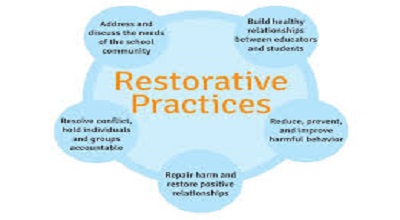
Benefits of Restorative Practices Certification
A. For Educators: Reduces classroom disruptions, Enhances student engagement, Promotes emotional intelligence
B. For Schools & Organisations: Lowers suspension and expulsion rates, Strengthens community bonds, Improves overall school climate
C. For Professionals Expands career opportunities, Increases earning potential, enhances leadership skills
Latest Trends in Restorative Practices Training
A. Virtual & Hybrid Training Programs: Post-pandemic, many institutions offer online RP certification, making training accessible worldwide.
B. Trauma-Informed Restorative Practices: Integrating trauma sensitivity into RP ensures a more inclusive approach.
C. AI & Restorative Justice: Emerging AI tools help track conflict resolution outcomes and improve restorative interventions.
D. Corporate Adoption: Businesses use RP to improve workplace culture and resolve employee disputes.
How to Get Certified in Restorative Practices?
1: Choose an Accredited Program: Look for programs recognised by the International Institute for Restorative Practices (IIRP) or universities.
2: Complete Training Modules: Courses typically include: Basic RP Concepts, Facilitation Techniques, Case Studies & Role-Playing Step
3: Pass the Certification Exam: Most programs require a final assessment or project.
4: Apply for Certification: Submit proof of training and receive your credential.
Top Institutions Offering Restorative Practices Certification
| Institution | Program Highlights | Duration |
|---|---|---|
| International Institute for Restorative Practices (IIRP) | Gold standard in RP training | 6-12 months |
| University of San Diego | Blended online & in-person | 3-6 months |
| Restorative Justice Education | School-focused RP training | Self-paced |
| Edutopia & Harvard Graduate School of Education | Advanced RP strategies | 4-8 weeks |
Employment Possibilities Using Restorative Techniques Certification
Professionals with certification in RP can work as: Coordinators of Restorative Justice in Schools Experts in Corporate Conflict Resolution Local Mediators Counselors and Social Workers Depending on experience, salaries range from $45,000 to $85,000 per year.
FAQs, or frequently asked questions
Q1. How long does it take to get certified?
Most programs take 3-12 months, depending on intensity.
Q2. Is certification obtained online legitimate?
Yes, most people are aware of certified online programs.
Q3. Can educators employ role-playing in the classroom?
Absolutely! RP enhances classroom dynamics and student behavior.
Q4. What’s the cost of certification?
Program sizes vary by institution, ranging from 500 to 3,000. Question
5: Is RP exclusive to schools?
No, RP is also used in communities, corporations, and prisons.
In conclusion
Practices for Restorative Professionals who receive training certification have revolutionary conflict-resolution abilities. Restorative Practices Training promotes empathy, accountability, and healing in a variety of contexts, including education, business, and community service.