
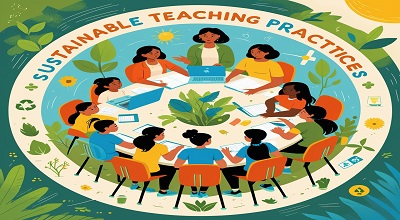
Sustainable Teaching Practices
Sustainable Teaching Practices: In today’s rapidly evolving educational landscape, sustainability in teaching is no longer optional—it’s a necessity. The Sustainable teaching practices ensure that educators can maintain high-quality instruction while minimizing burnout, promoting student engagement, and fostering long-term learning retention.
At TeacherEducator.com, we believe in empowering educators with the latest strategies for sustainable teaching. This comprehensive guide explores innovative, research-backed teaching methods, real-world examples, and actionable tips to help teachers thrive in the classroom.
What Are Sustainable Teaching Practices?
Sustainable teaching refers to pedagogical approaches that are environmentally, socially, and economically viable while ensuring long-term effectiveness. These practices focus on:
- Reducing teacher burnout
- Enhancing student engagement
- Encouraging lifelong learning
- Minimizing resource waste
Examples of Sustainable Teaching:
- Flipped Classrooms: Students review materials at home and engage in discussions in class.
- Digital Assignments: Reducing paper usage through online submissions.
- Peer Teaching: Students learn from each other, reducing teacher workload.
Why Are Sustainable Teaching Practices Important?
Sustainable teaching benefits educators, students, and institutions by:
✅ Reducing Teacher Stress: Preventing burnout through efficient workload management.
✅ Improving Student Outcomes: Active learning increases retention and engagement.
✅ Promoting Environmental Responsibility: Digital tools reduce paper waste.
✅ Encouraging Equity: Accessible learning for diverse student populations.
Key Sustainable Teaching Strategies with Examples
A. Student-Centered Learning
Instead of traditional lectures, teachers act as facilitators while students take charge of their learning.
Example:
- Inquiry-Based Learning: Students explore real-world questions (e.g., “How does climate change affect our community?”) and research solutions.
B. Collaborative Learning Techniques
Group work fosters teamwork and reduces dependency on teacher-led instruction.
Example:
- Think-Pair-Share: Students think individually, discuss in pairs, and share insights with the class.
C. Technology Integration
Digital tools enhance engagement while reducing resource consumption.
Example:
- Gamified Learning (Kahoot!, Quizizz): Makes assessments interactive and fun.
D. Mindfulness and Well-being in the Classroom
Sustainable teaching includes mental health support for both teachers and students.
Example:
- 5-Minute Meditation Sessions: Helps students refocus and reduces stress.
E. Project-Based and Experiential Learning
Hands-on projects make learning meaningful and long-lasting.
Example:
- Community Garden Project: Students learn biology, sustainability, and teamwork by maintaining a school garden.
Case Studies: Successful Implementation of Sustainable Teaching
Case Study 1: Finland’s Phenomenon-Based Learning
Finland integrates cross-disciplinary, student-driven projects, reducing teacher burnout while boosting creativity.
Case Study 2: Singapore’s Digital Literacy Programs
Schools use AI-driven personalized learning, reducing paper waste and improving efficiency.
Challenges and Solutions in Adopting Sustainable Teaching
| Challenge | Solution |
|---|---|
| Resistance to change | Professional development workshops |
| Limited resources | Use free digital tools (Google Classroom, Canva) |
| Student disengagement | Gamification & interactive lessons |
Future Trends in Sustainable Education
- AI-Powered Personalized Learning
- Virtual Reality (VR) Classrooms
- Green Schools with Solar-Powered Campuses
FAQs on Sustainable Teaching Practices
Q1: How can I start implementing sustainable teaching?
Start small—replace paper handouts with digital copies or introduce peer reviews.
Q2: Does sustainable teaching require expensive technology?
No! Free tools like Google Docs and Padlet work effectively.
Conclusion
Sustainable teaching is the future of education. By adopting these practices, educators can create engaging, efficient, and eco-friendly classrooms. For more teaching strategies, visit TeacherEducator.com.